Boolean Search for Recruiters: Operators, Examples and Strings to Copy
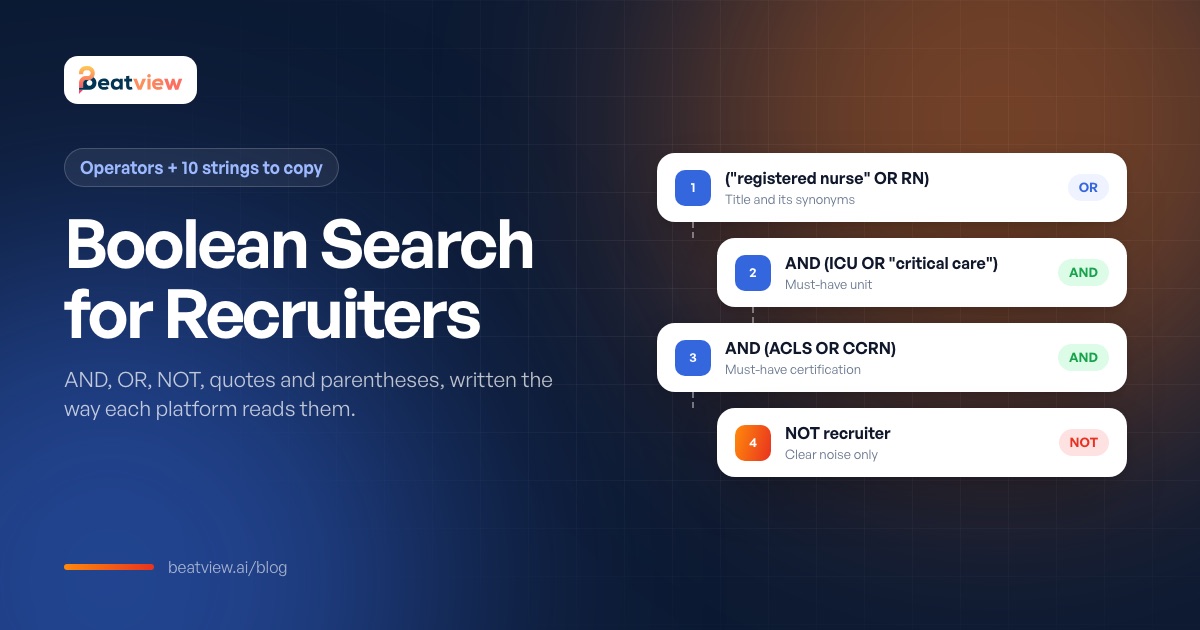
The five Boolean operators recruiters use, how LinkedIn and Google X-ray search each read them, how to build a string from a job brief, and 10 sourcing strings to copy and adapt.
Practical, sourced guides on candidate screening, structured and AI interviews, recruiting metrics and responsible AI — written for recruitment agencies and hiring teams.

The five Boolean operators recruiters use, how LinkedIn and Google X-ray search each read them, how to build a string from a job brief, and 10 sourcing strings to copy and adapt.

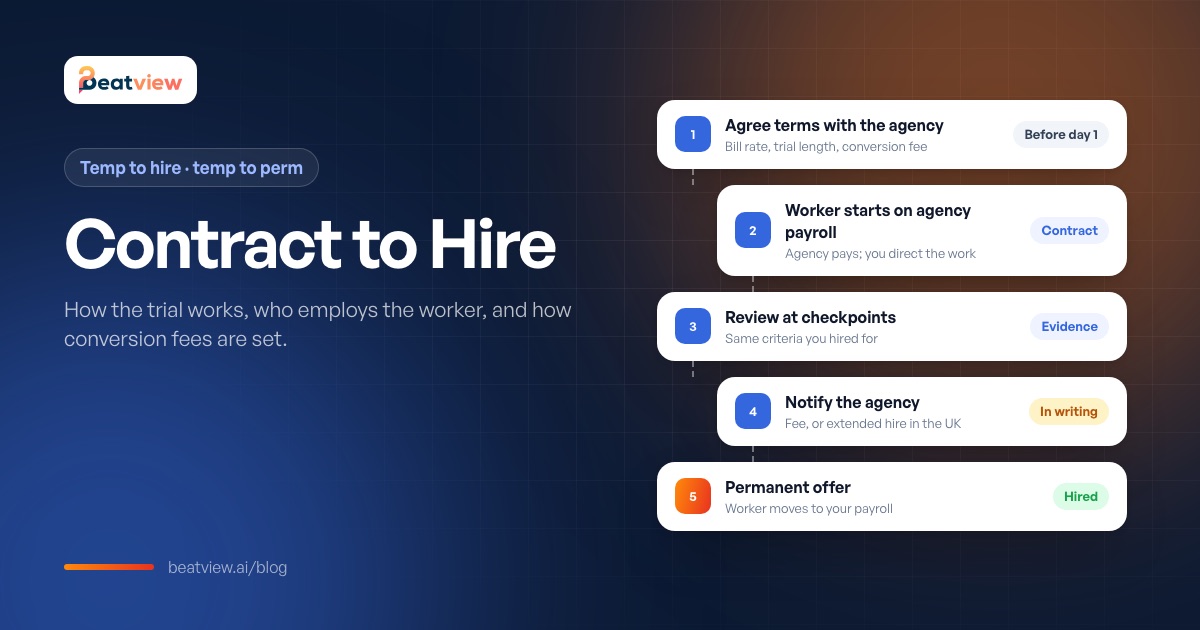
Contract to hire lets you try a worker through an agency before offering a permanent job. How it works, who employs the worker, how conversion fees are structured, and the UK and Illinois rules.

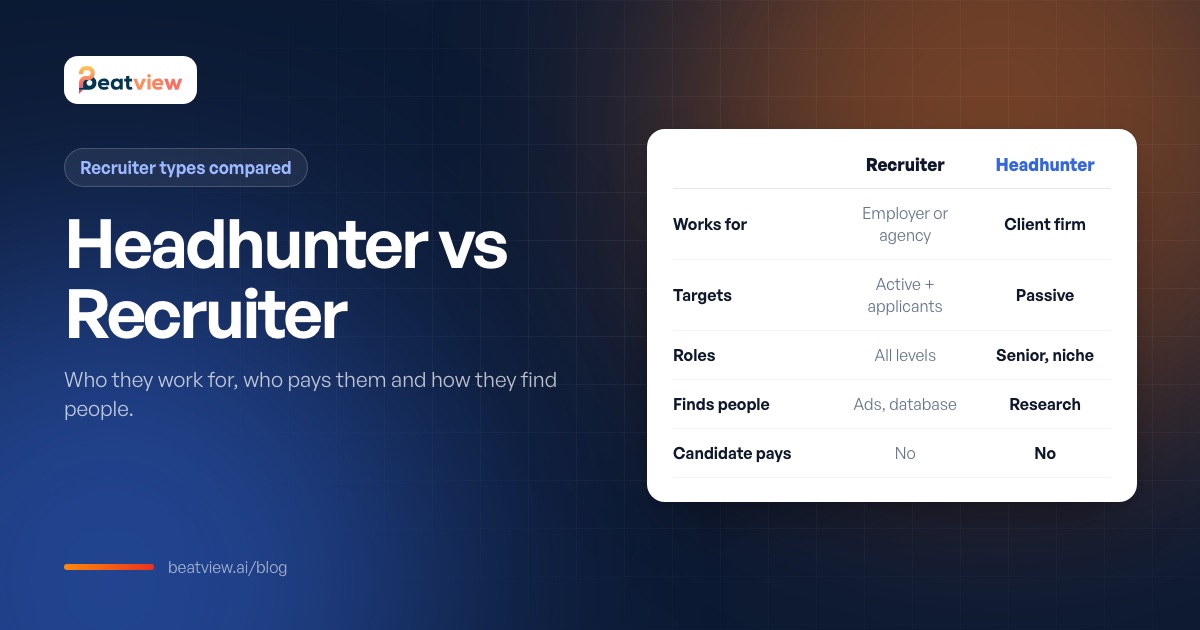
A headhunter approaches people who are not job hunting, usually for senior or specialist roles, on an employer’s behalf. Recruiter is the wider term. How in-house, agency and executive search recruiters differ.

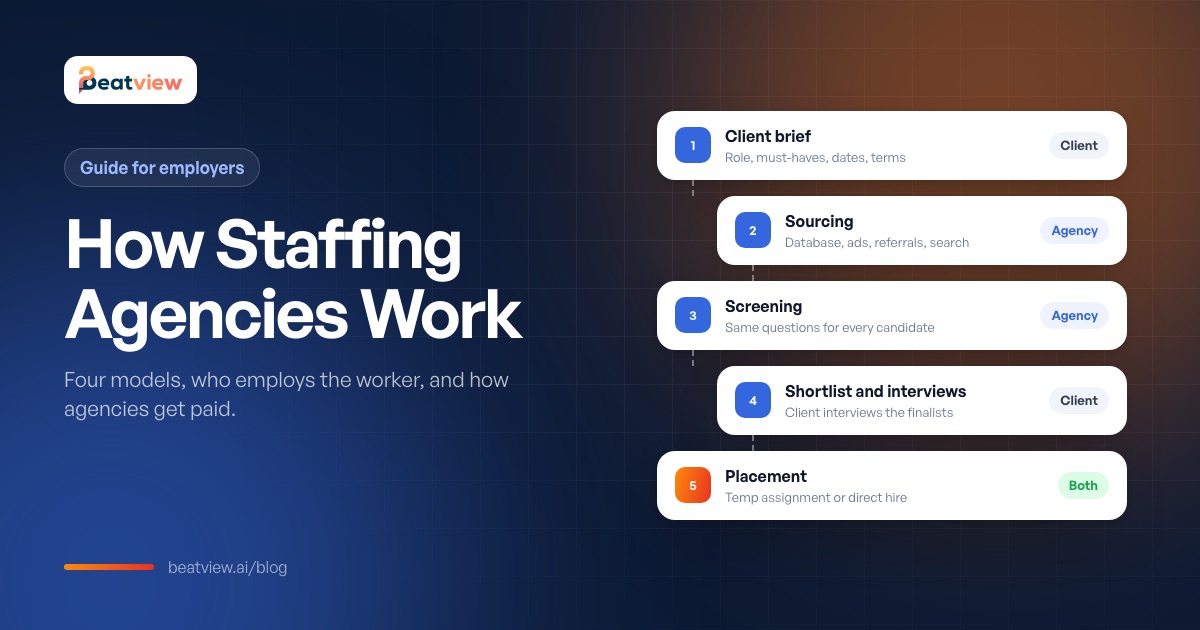
Staffing agencies find, screen and supply workers, and the employer pays. The four models, who employs the worker in each, how agencies make money, and the questions to ask before you sign.
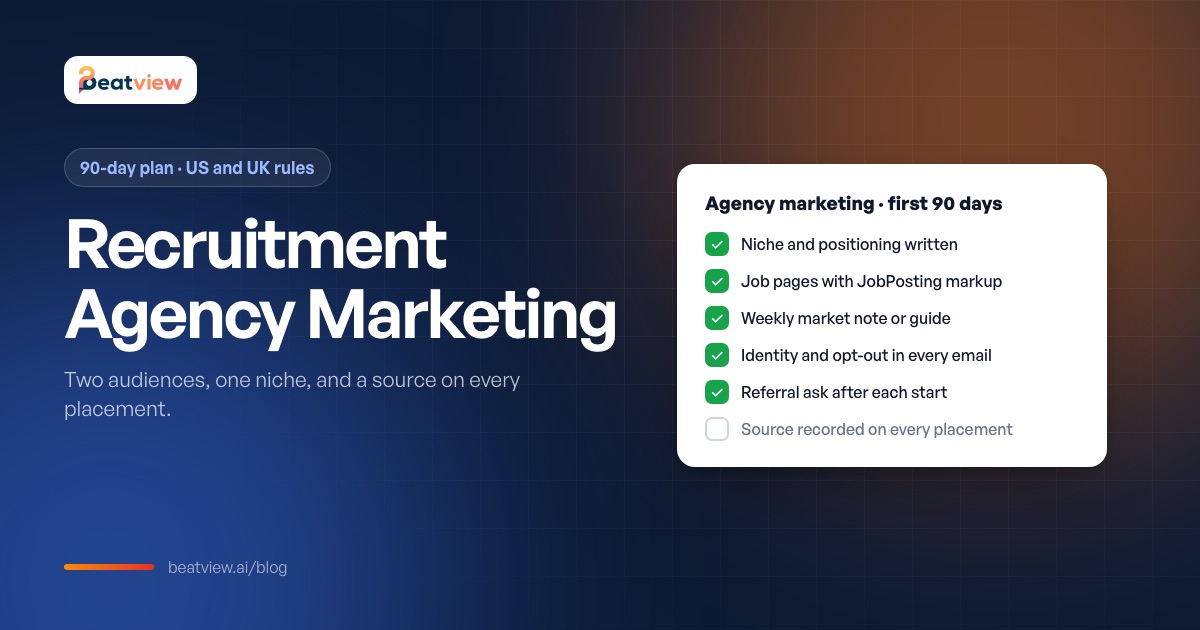
A practical recruitment agency marketing plan: two audiences, a niche you can own, job pages Google can list, useful content, LinkedIn and email within US and UK rules, referrals, reviews and a 90-day plan.
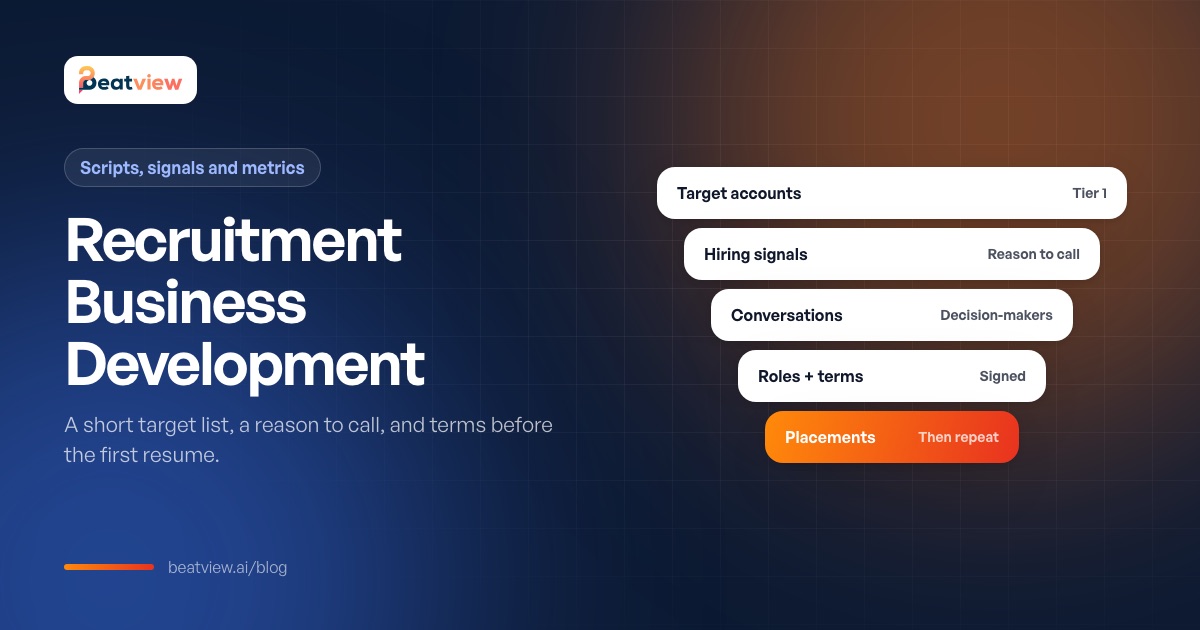
A practical guide to recruitment business development: build a target account list, spot hiring signals, use short call openers and emails, market candidates with consent, agree terms and track BD metrics.

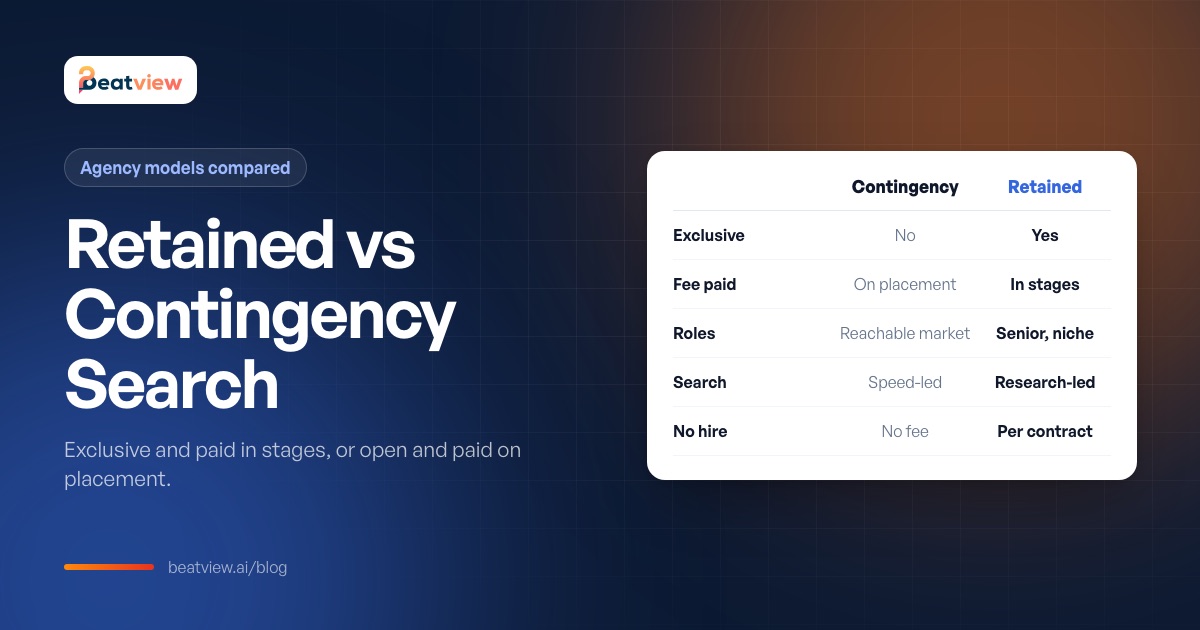
Retained search is exclusive and paid in stages; contingency search is non-exclusive and paid only on placement. How they differ, which roles suit each, and what to agree before you sign.

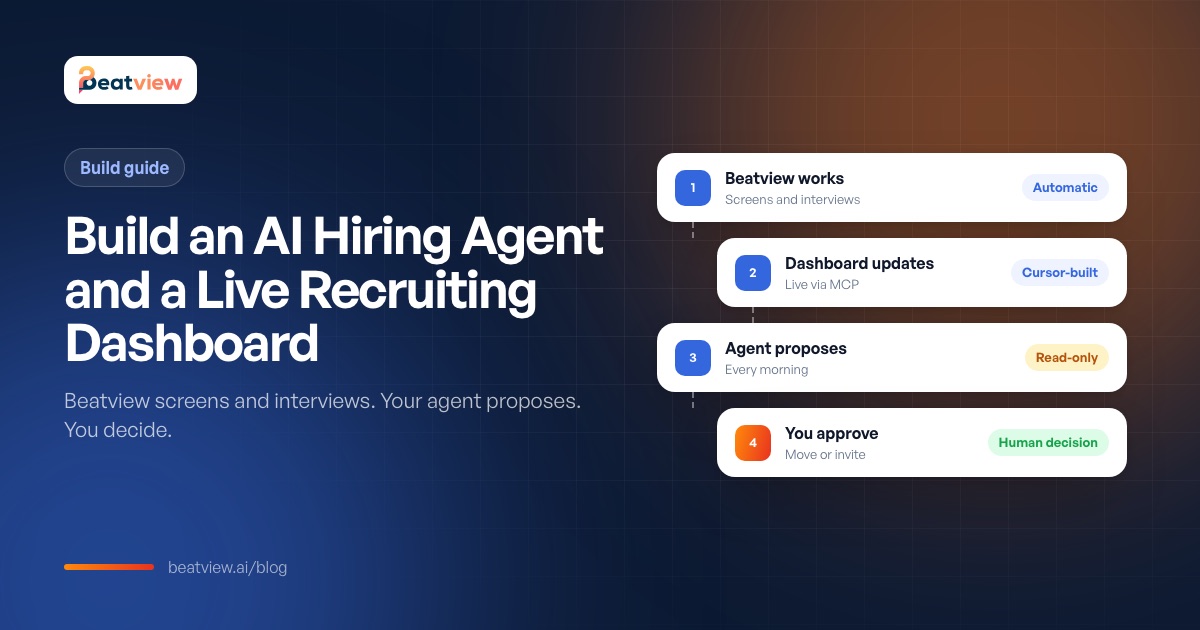
A practical build guide: connect the Beatview MCP server to Cursor, build a recruiting dashboard that stays up to date, and add an agent that proposes next steps while a person approves every decision.

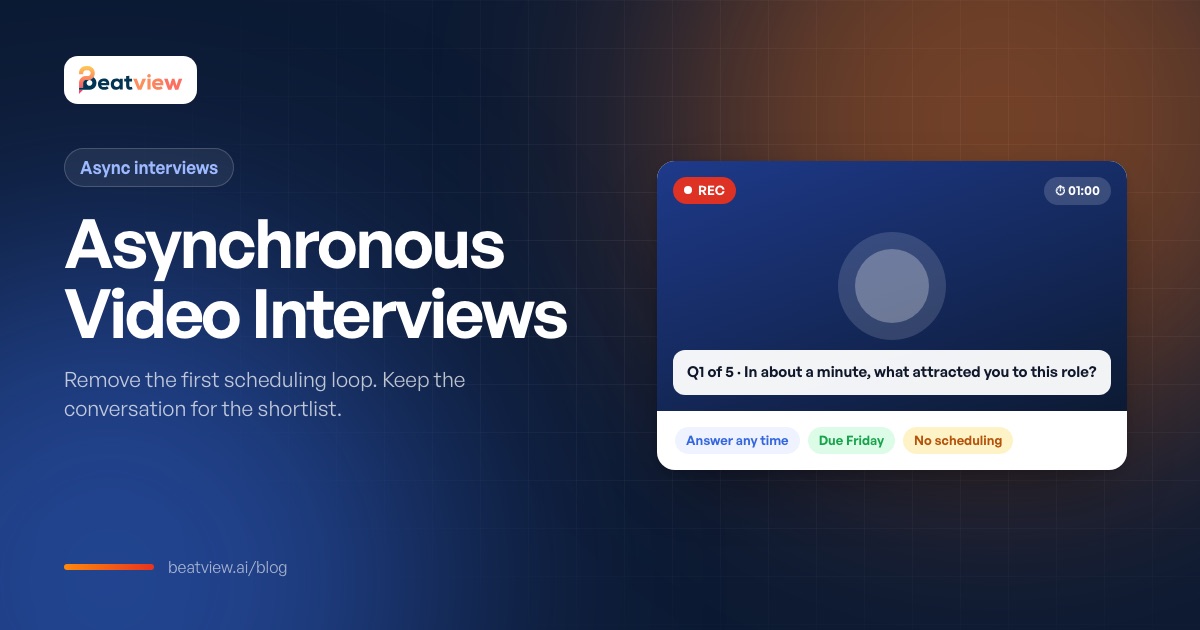
What an asynchronous video interview is, how it compares with live interviews, which scheduling delays it removes (and which it does not), when it fits and how to handle unfinished interviews.

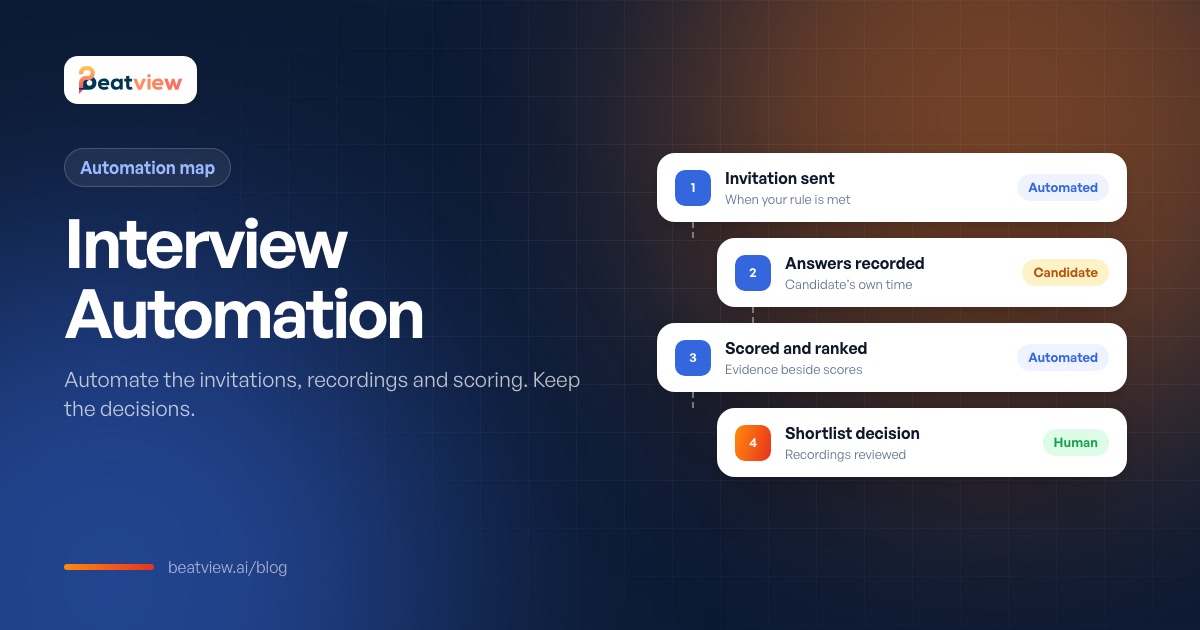
Which interview tasks software can automate — invitations, recording, scoring, ranking — which stay human, the configurations you can run and a one-role setup checklist for automated interviews.

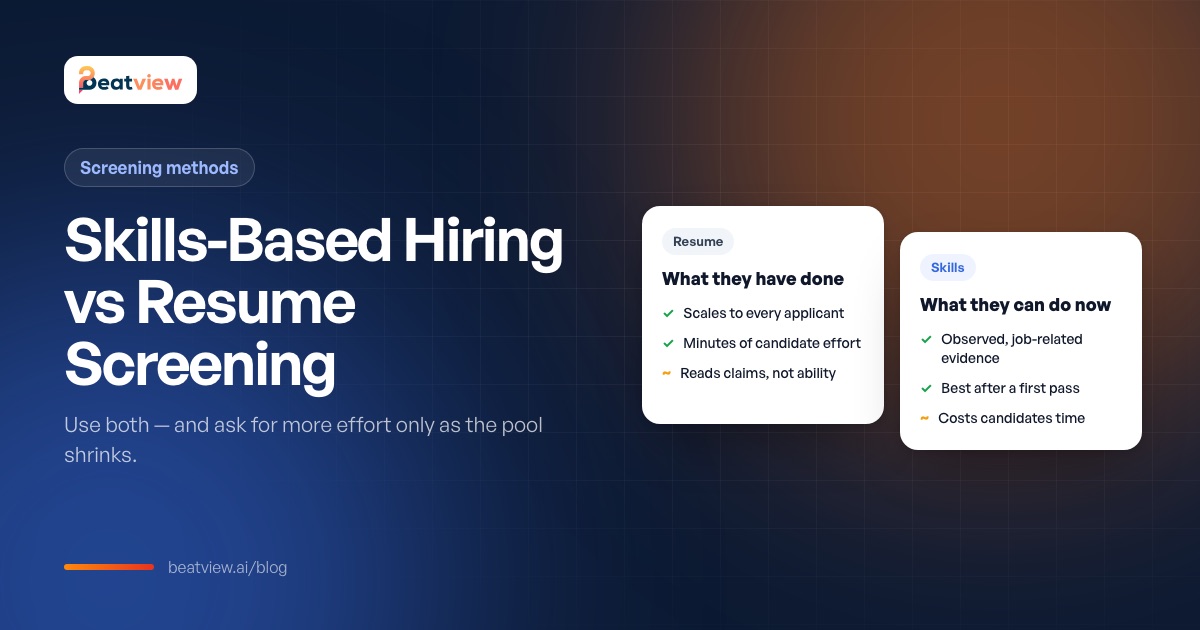
What skills-based hiring is, how it compares with resume screening, what the research says about each type of evidence, and a staged model and decision tree for using both.

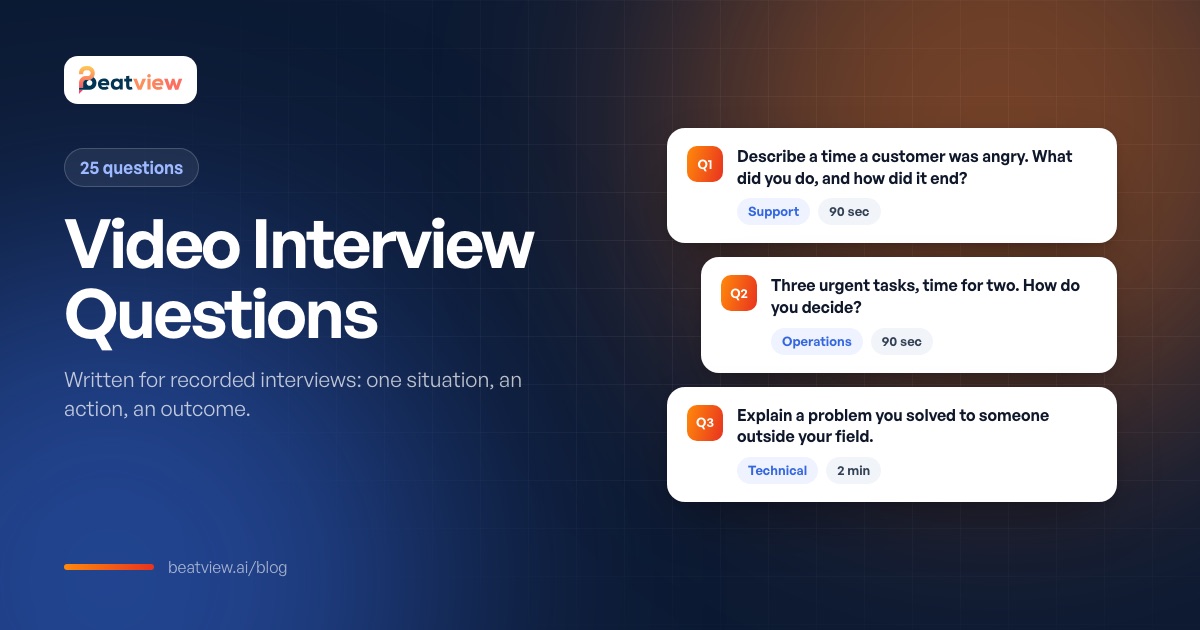
25 recorded video interview questions to ask candidates — warm-up, behavioral questions by role family and practical questions — with what a strong answer contains and a question-quality checklist.

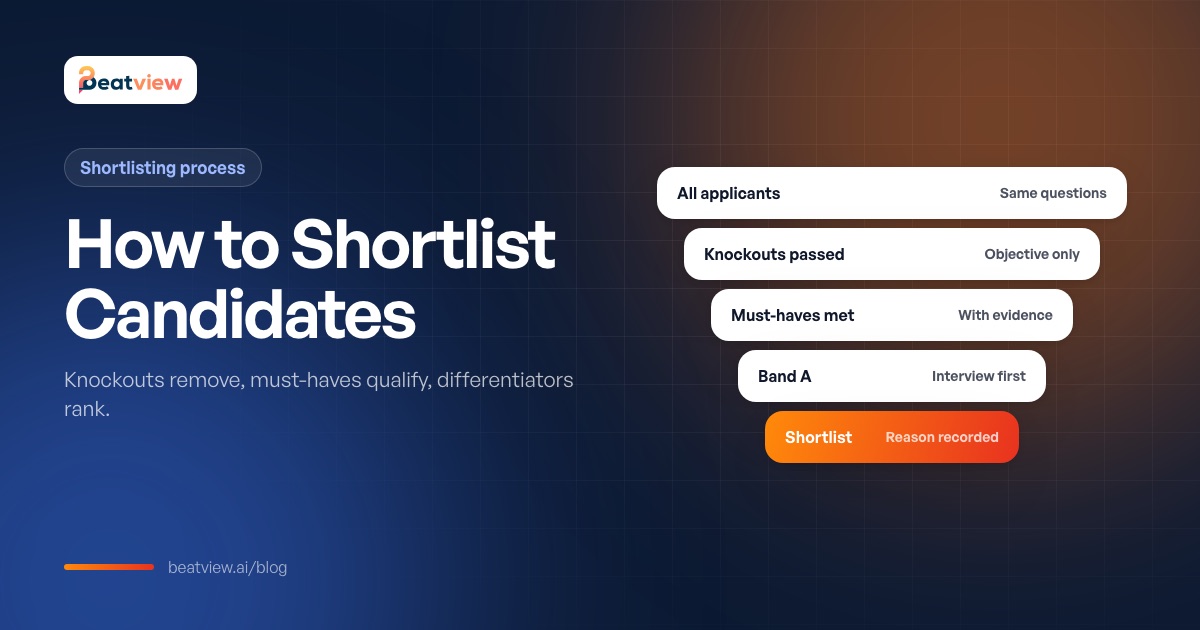
How to shortlist candidates after CV or resume screening: knockouts, must-haves and differentiators, a six-step process, a shortlisting matrix template and how many candidates to shortlist.

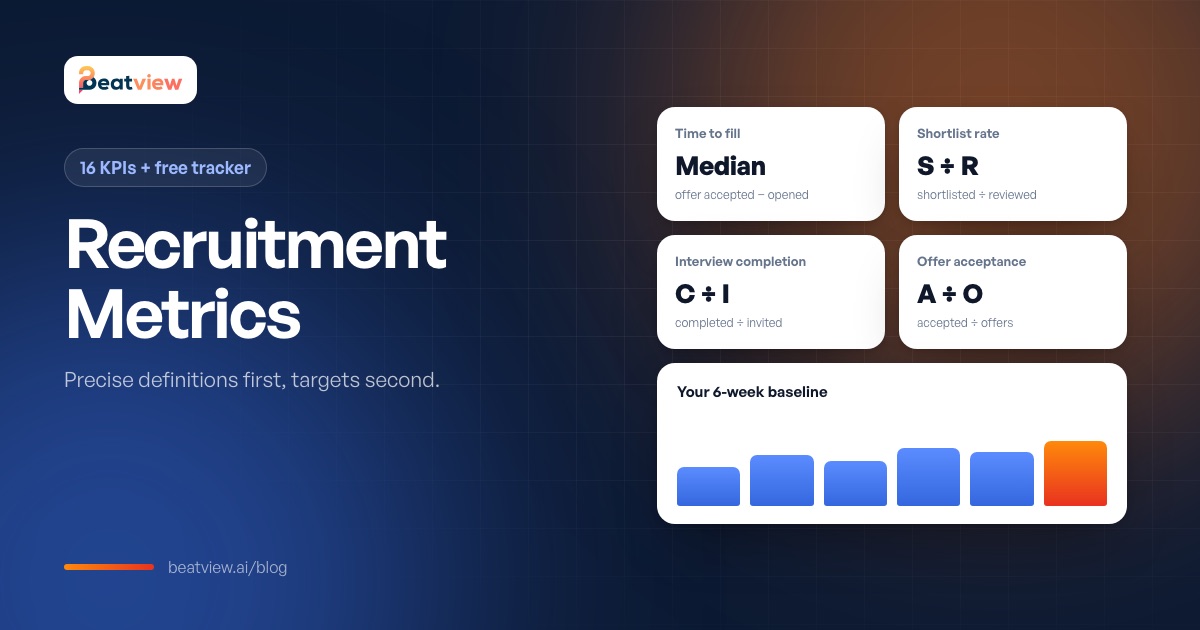
16 recruitment metrics and KPIs with formulas — speed, funnel, quality and cost — plus agency KPIs, a screening-metrics dictionary, a reporting guide and a free tracker to build your baseline.

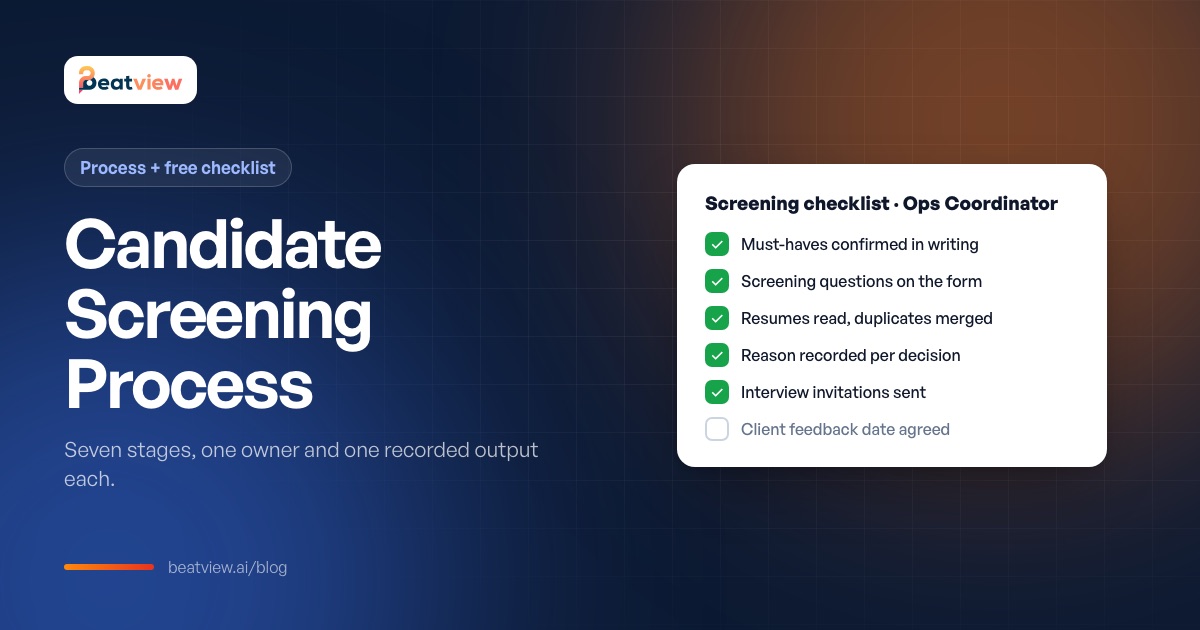
What candidate screening is, the screening methods compared, a seven-stage process with an owner and output for each stage, and a downloadable candidate screening checklist.

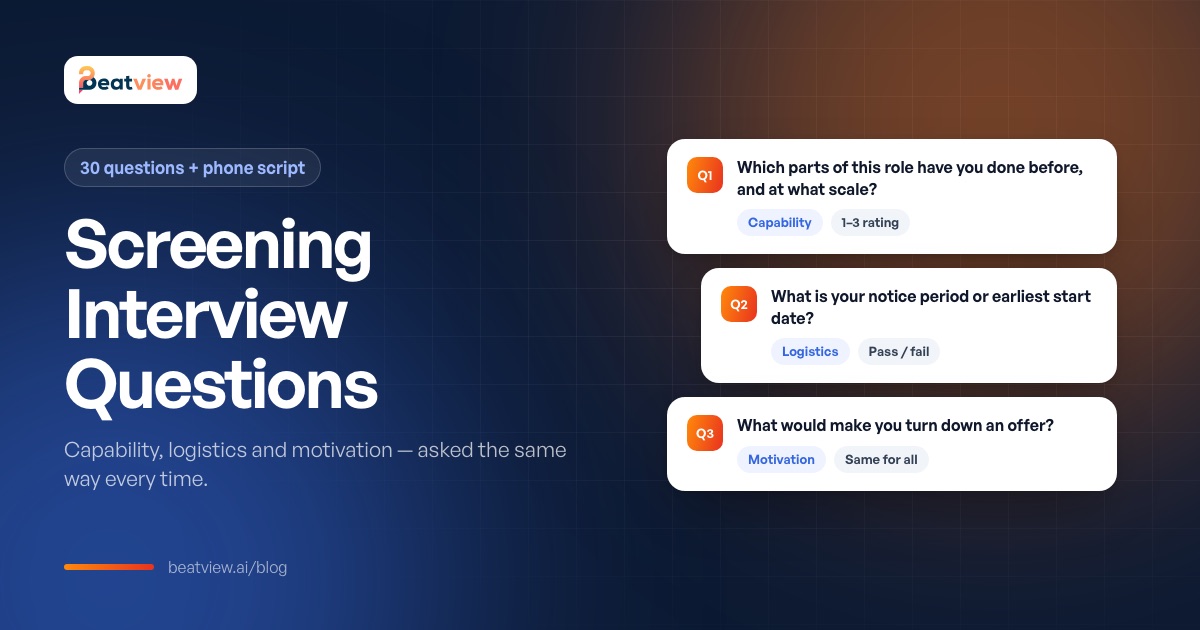
30 screening interview questions for recruiters, grouped into capability, logistics, motivation and role-specific questions, with what good answers include, a 15-minute phone screen script and questions to avoid.

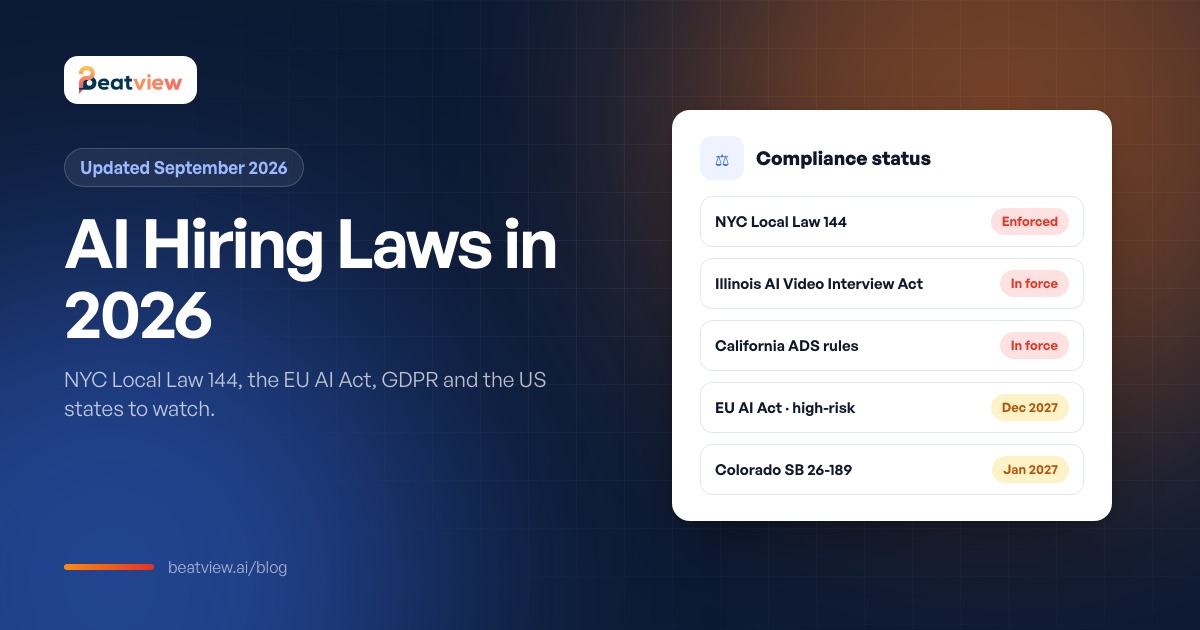
The main AI hiring laws and their status as of September 2026 — NYC Local Law 144, Illinois, California, Colorado, US federal law, the EU AI Act, GDPR and the UK — plus an agency compliance checklist.

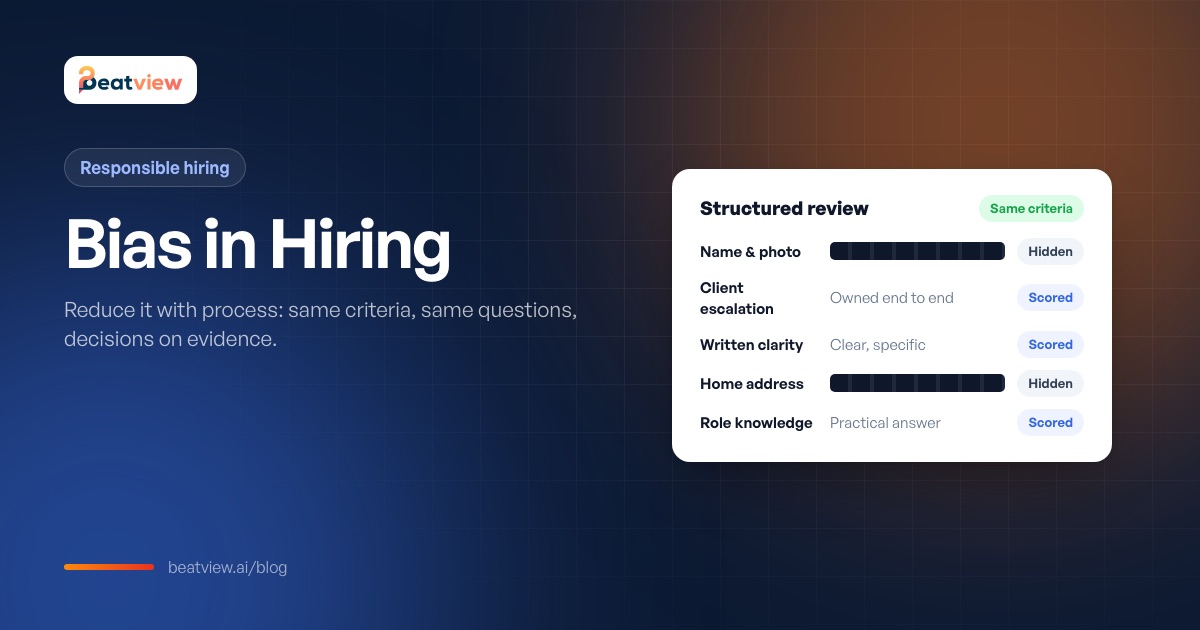
The common types of hiring bias, what research shows about bias in screening, a four-step method to reduce it, blind hiring and training in context, and the specific risks of AI.

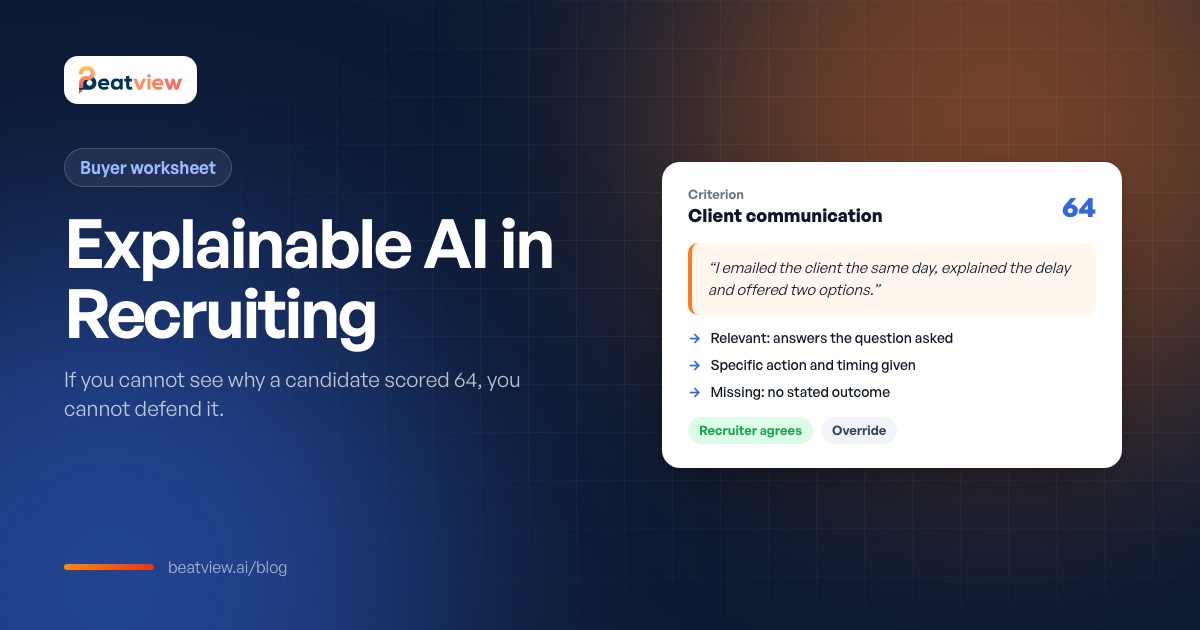
What explainable AI means in recruiting, why it matters legally and commercially, the five things to inspect on one candidate in a vendor demo, and what a real explainable candidate record looks like.

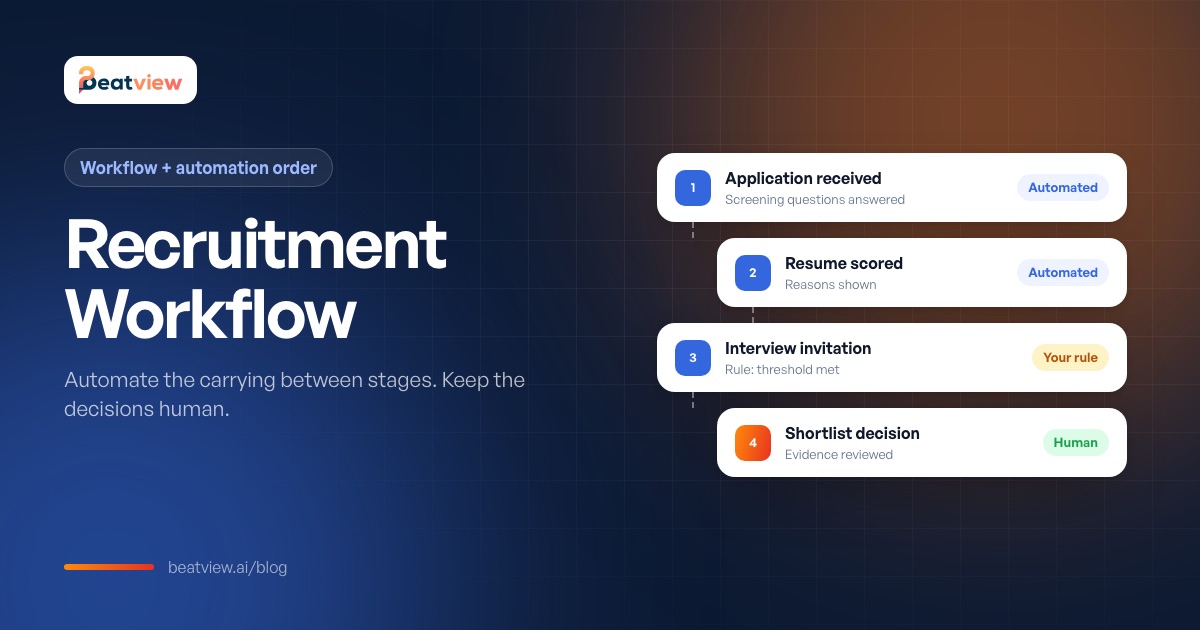
The stages of a recruitment workflow, the order in which to automate them, a trigger-and-action map, what should stay human and a launch checklist for automating your first role.

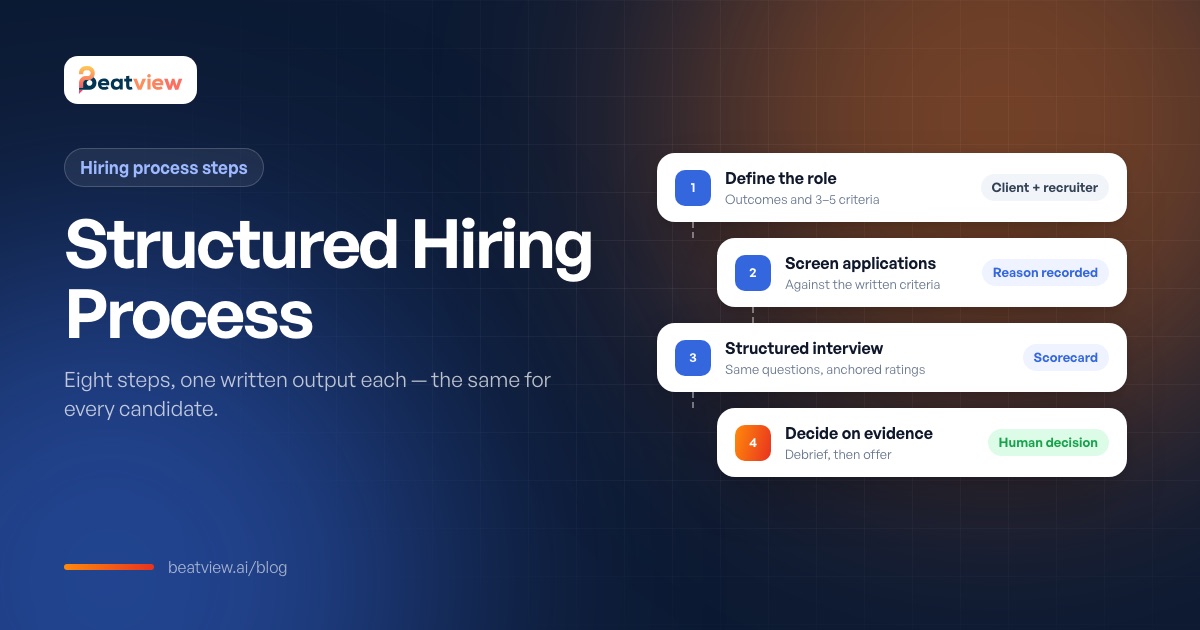
The eight steps of a structured hiring process, the written output and owner of each, and — for recruitment agencies — how to agree criteria, decision ownership and handoff with a client.

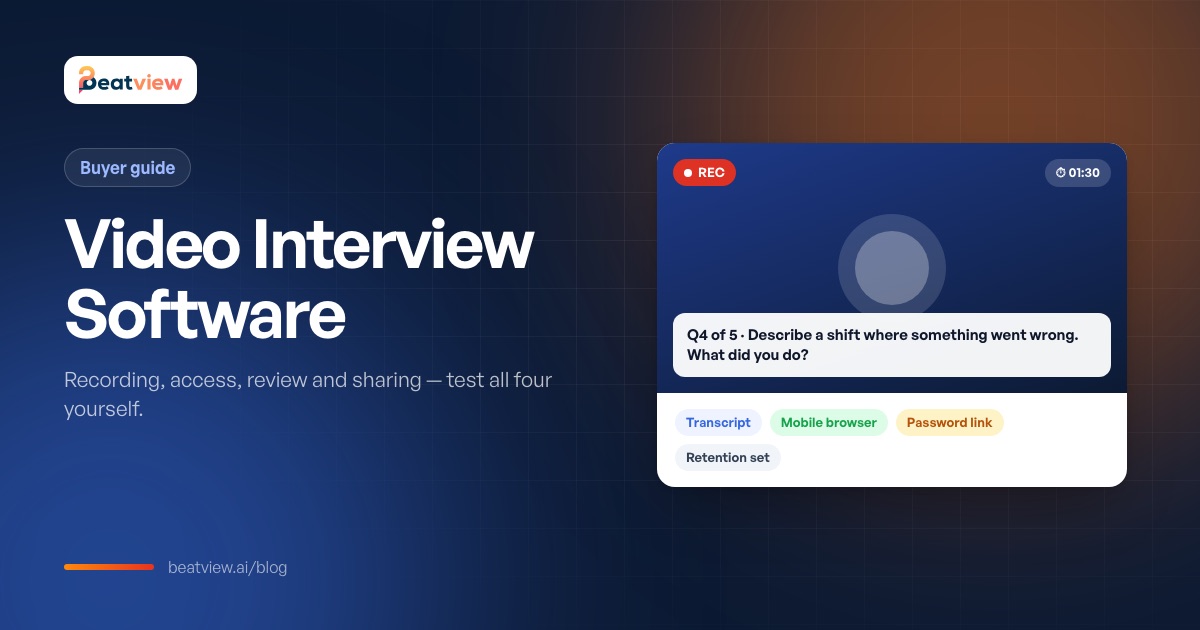
The types of video interview software, the four mechanics that decide whether recorded screening works — recording, candidate access, reviewer workflow, sharing — and a test for each.

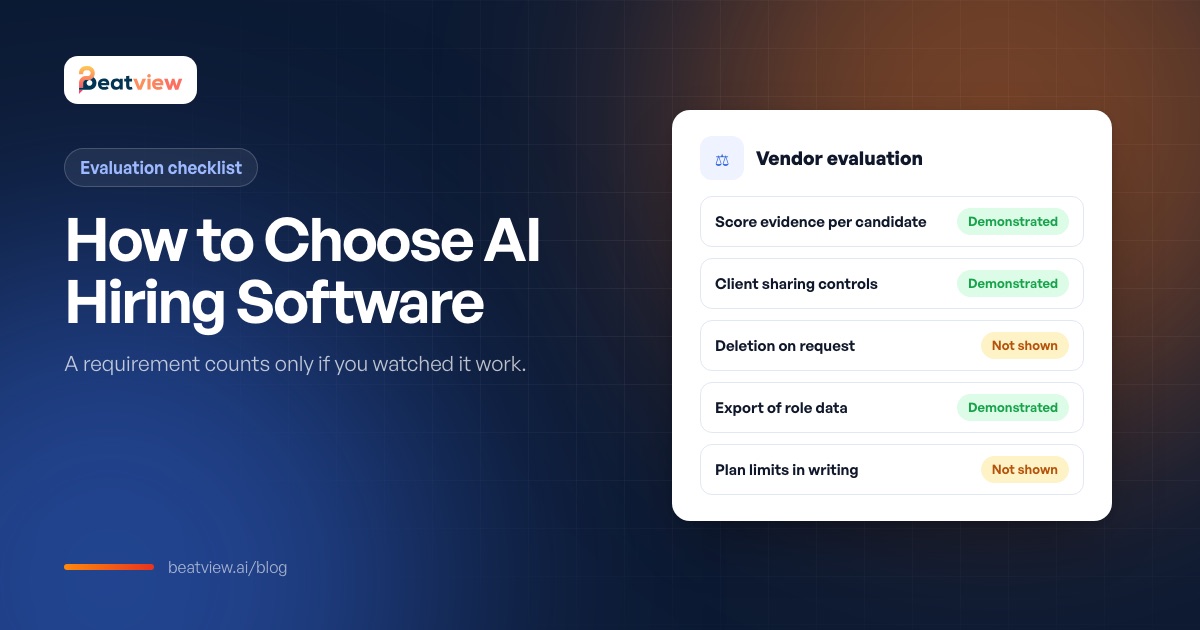
The main types of AI hiring software, a seven-area evaluation built on "demonstrated or not shown", five questions that separate vendors quickly and a bounded pilot plan with acceptance criteria.

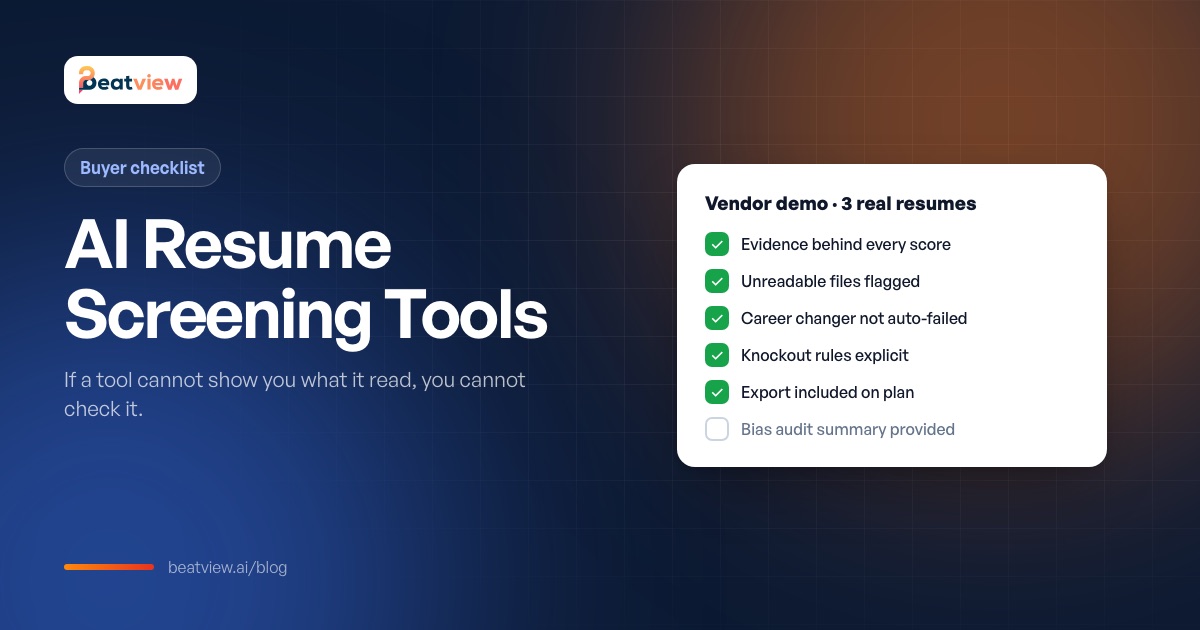
How to evaluate AI resume screening tools: ten things to check, a three-candidate demo test, vendor claims to treat with caution and the compliance questions every vendor should answer.

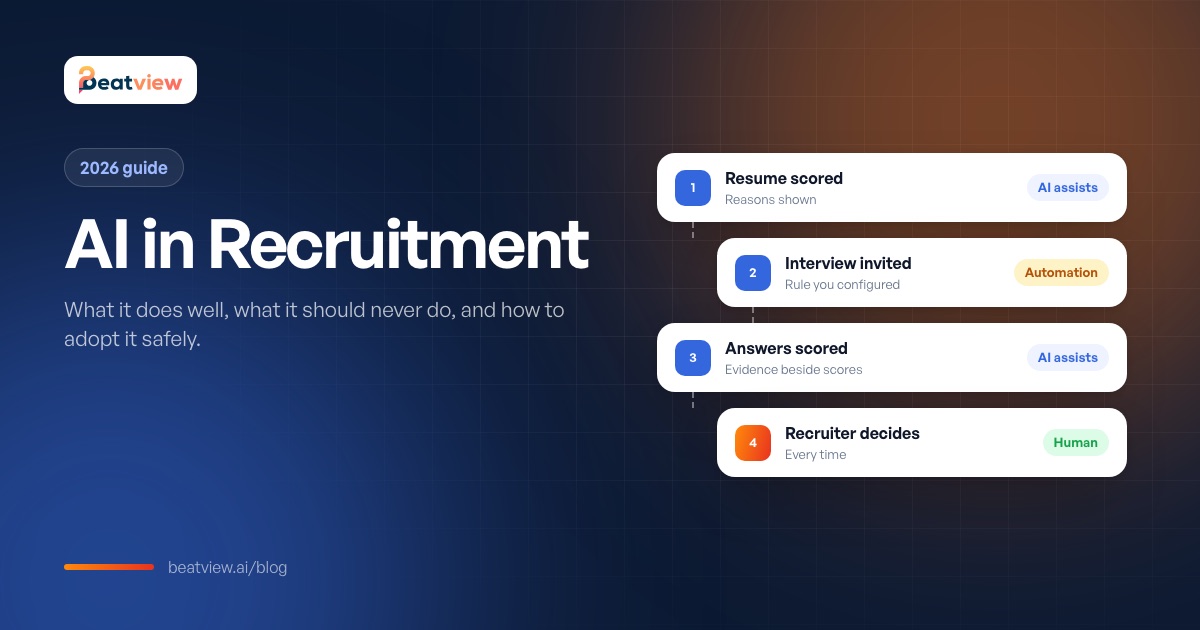
How AI is used across the recruitment process, assistance vs automation, the real benefits and risks, the rules that apply and a five-phase plan for adopting AI without disrupting delivery.

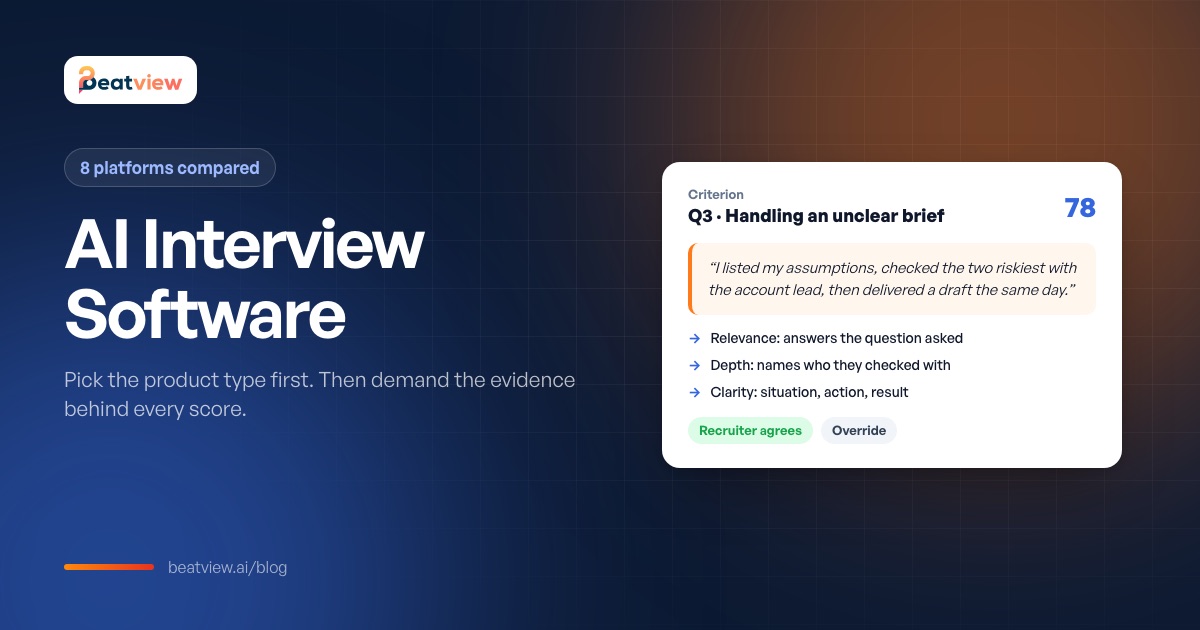
The three types of AI interview software, how they work, eight platforms compared on format, AI features and published pricing, a checklist for the AI scoring layer and a one-week trial plan.

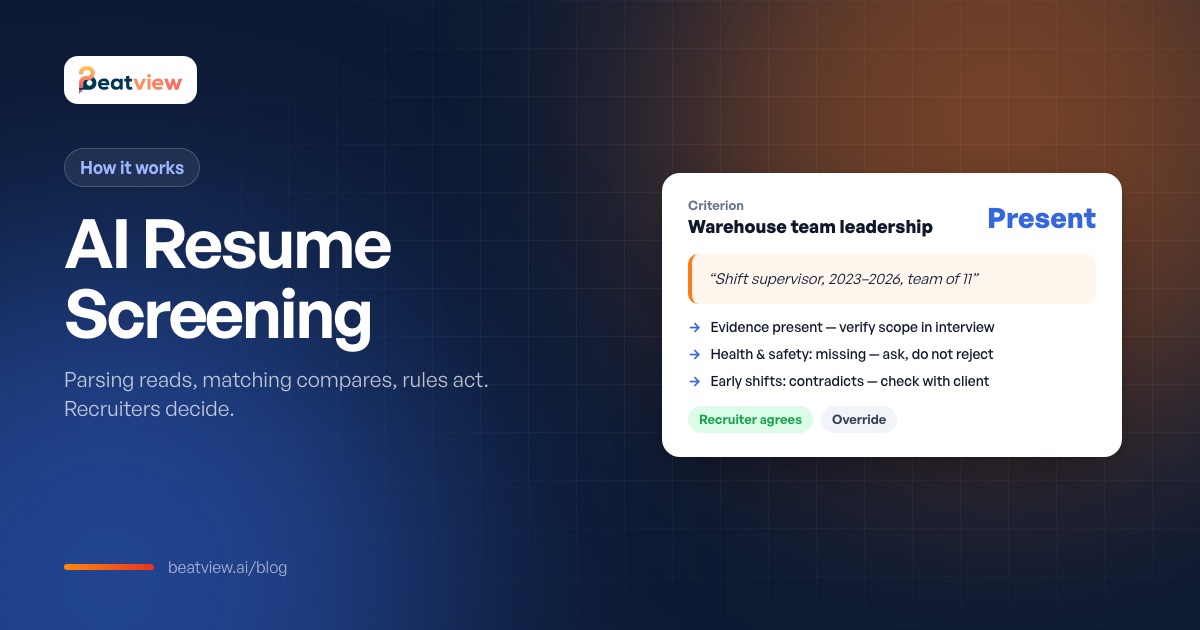
How AI resume screening works — parsing, matching and stage rules — what good output looks like, how it compares with manual screening, where bias comes from and what recruiters still need to check.

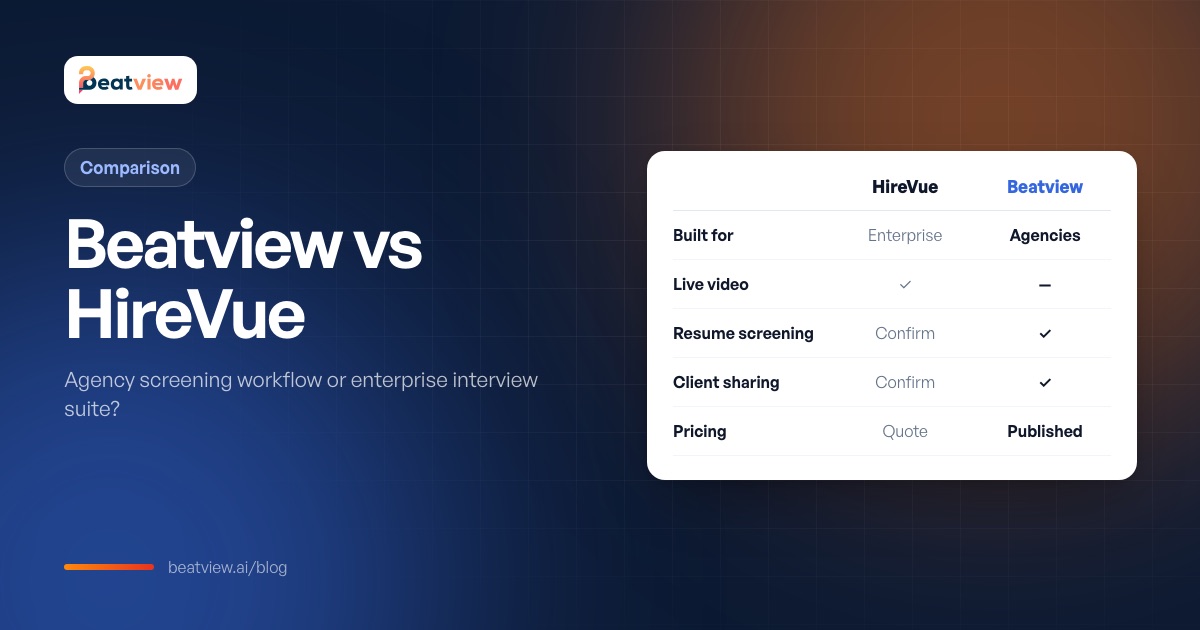
A sourced comparison of Beatview and HireVue — focus, interview formats, AI scoring, client sharing, integrations and pricing — with guidance on which suits agencies, lean teams and enterprises.

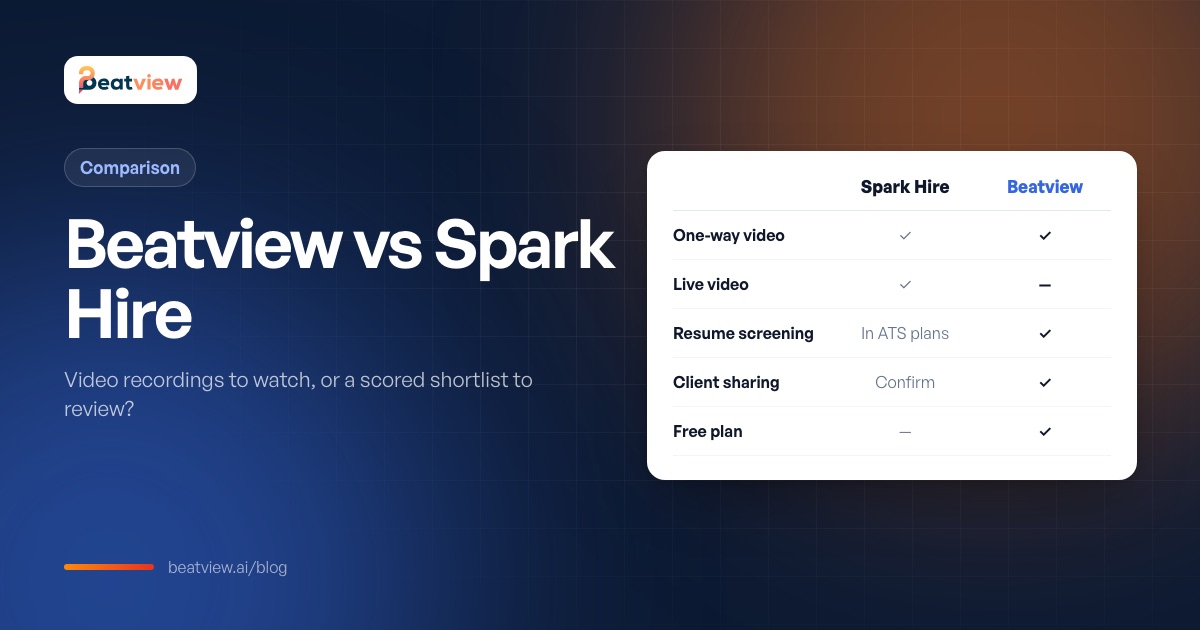
A sourced comparison of Beatview and Spark Hire — interview formats, AI features, resume screening, client sharing, integrations and pricing — and who each one suits.

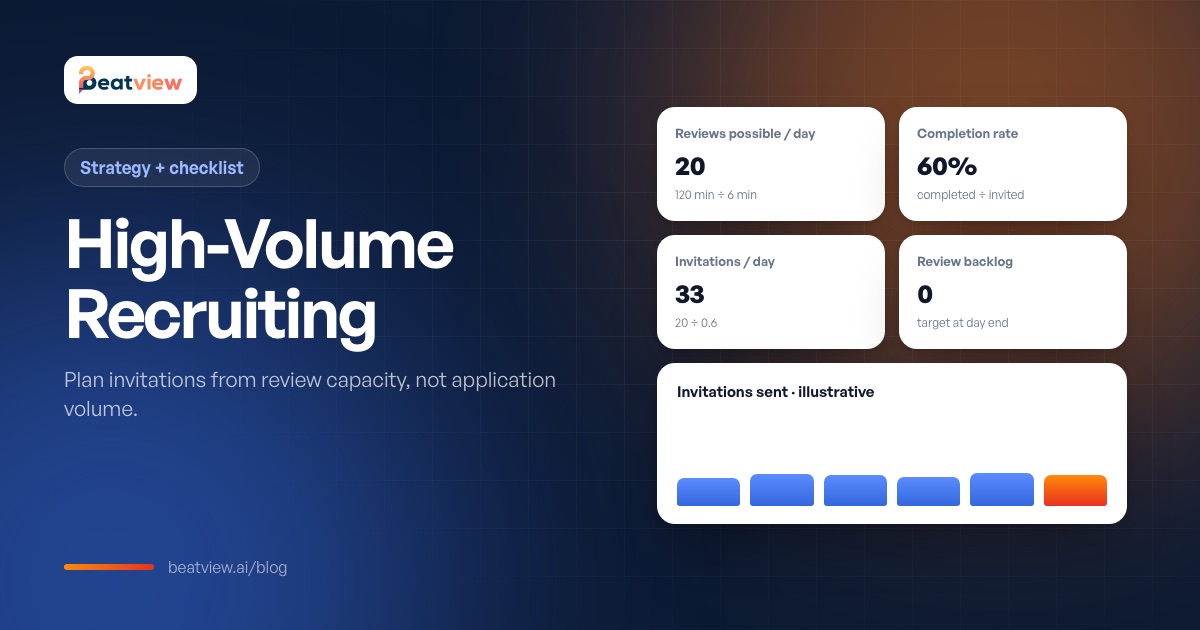
How to run high-volume hiring: eight strategies, a capacity worksheet for deciding how many candidates to invite, handling incomplete interviews, a software requirements checklist and a pilot plan.

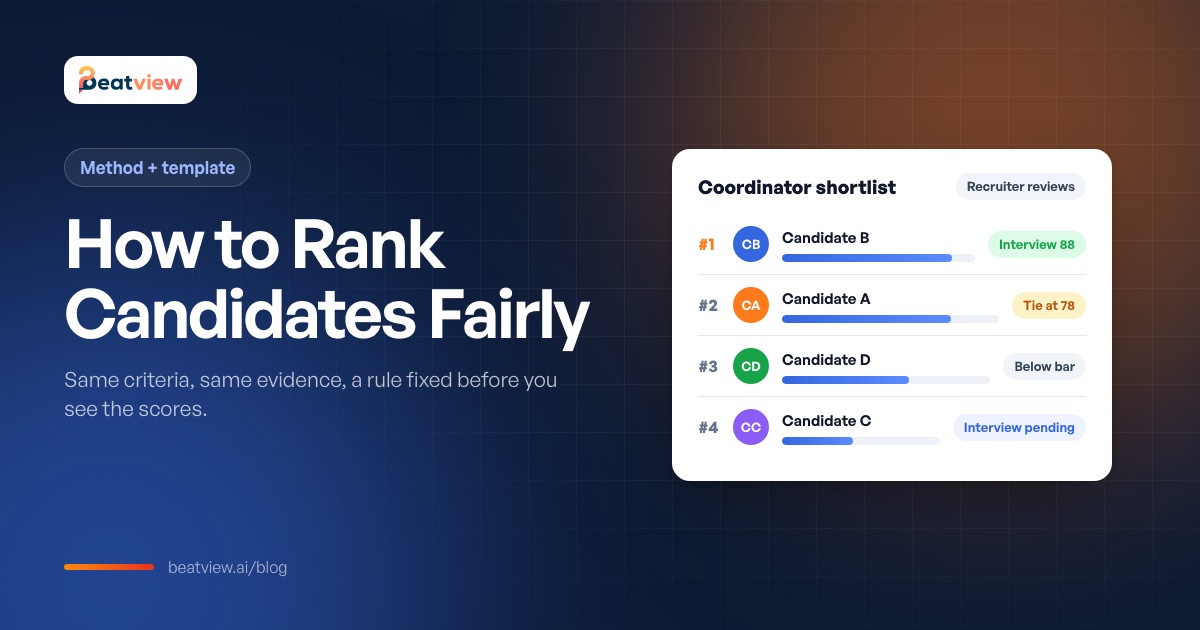
A six-step method to rank candidates on the same evidence, the main ranking methods compared, a candidate comparison matrix template, a worked example and the fairness checks to run before you shortlist.

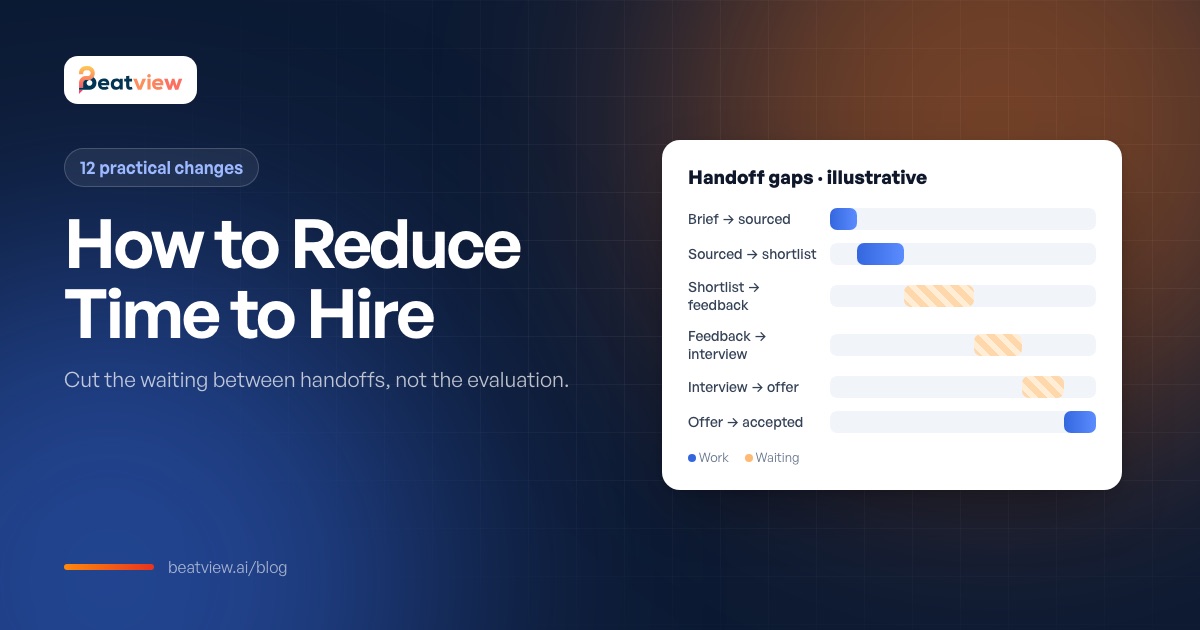
The time-to-hire formula, where the days usually go, and twelve specific changes — each with an owner, the bottleneck it removes and the metric that proves it worked.

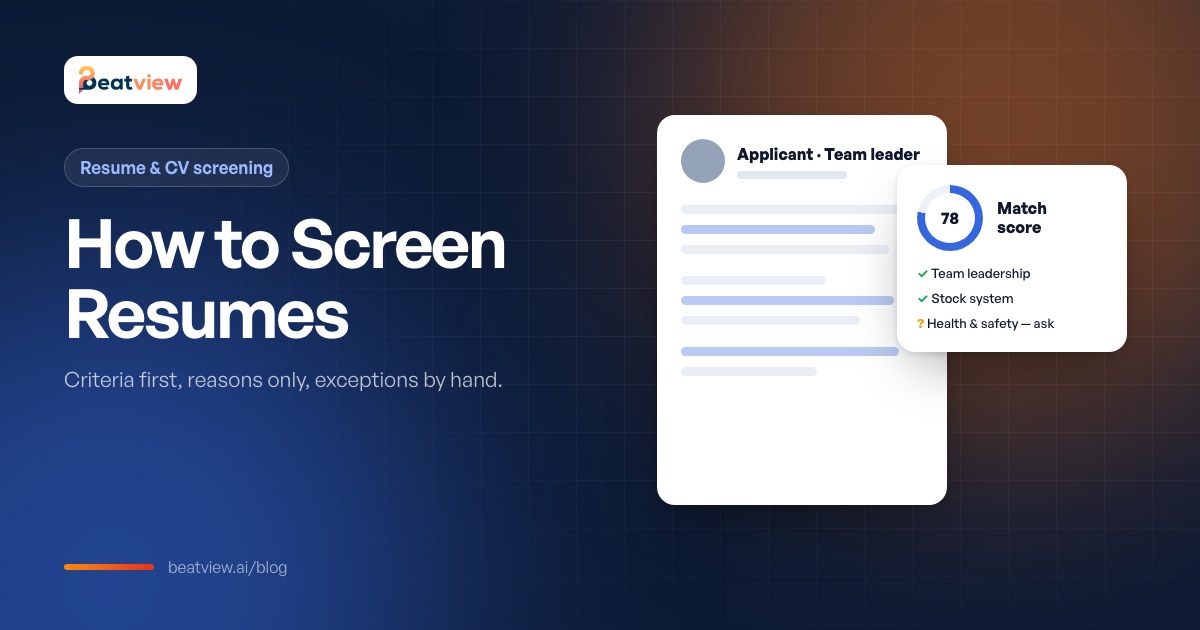
A five-step resume screening process for recruiters: criteria a resume can evidence, a batch intake check, review against criteria, a written rule for clear passes and a manual check of exceptions.

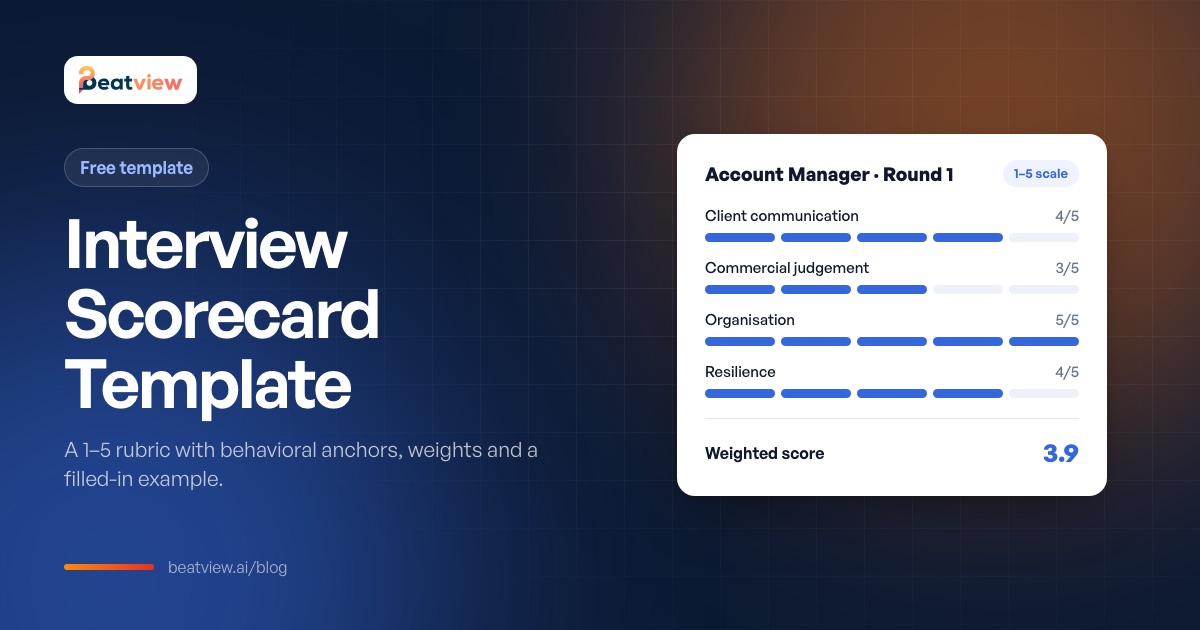
A free interview scorecard you can copy or download, with a 1–5 behaviorally anchored rating scale, suggested weights, a filled-in example and the method for comparing candidates fairly.

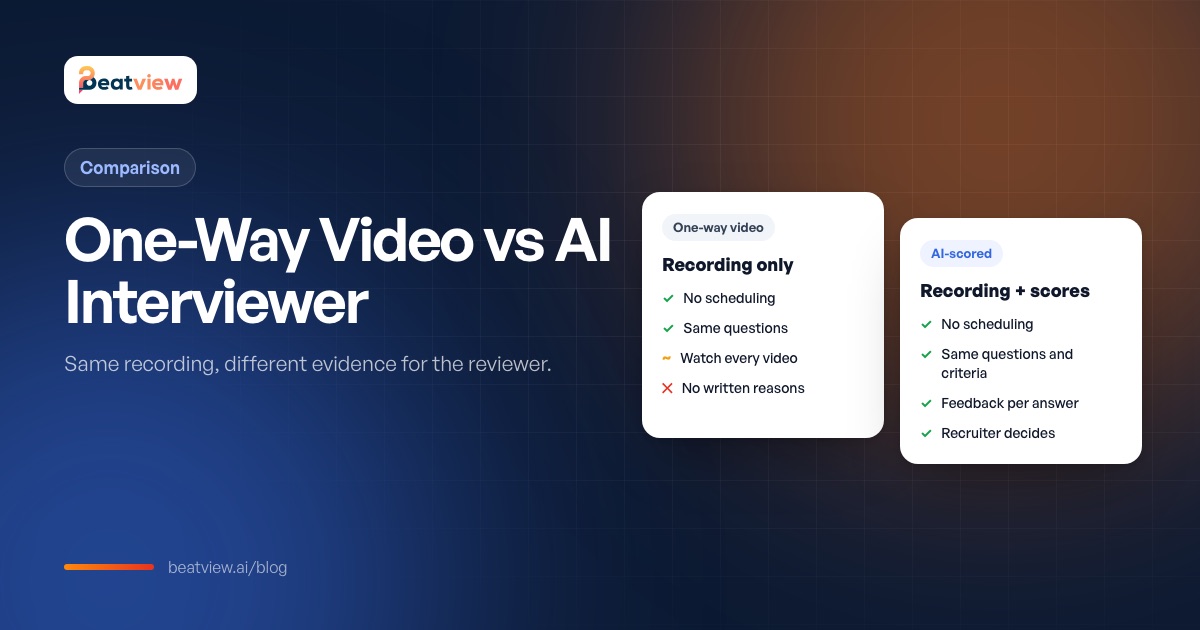
How one-way video interviews, AI-scored interviews and conversational AI interviewers differ in question delivery, reviewer output and consistency — with a decision table for hiring teams.

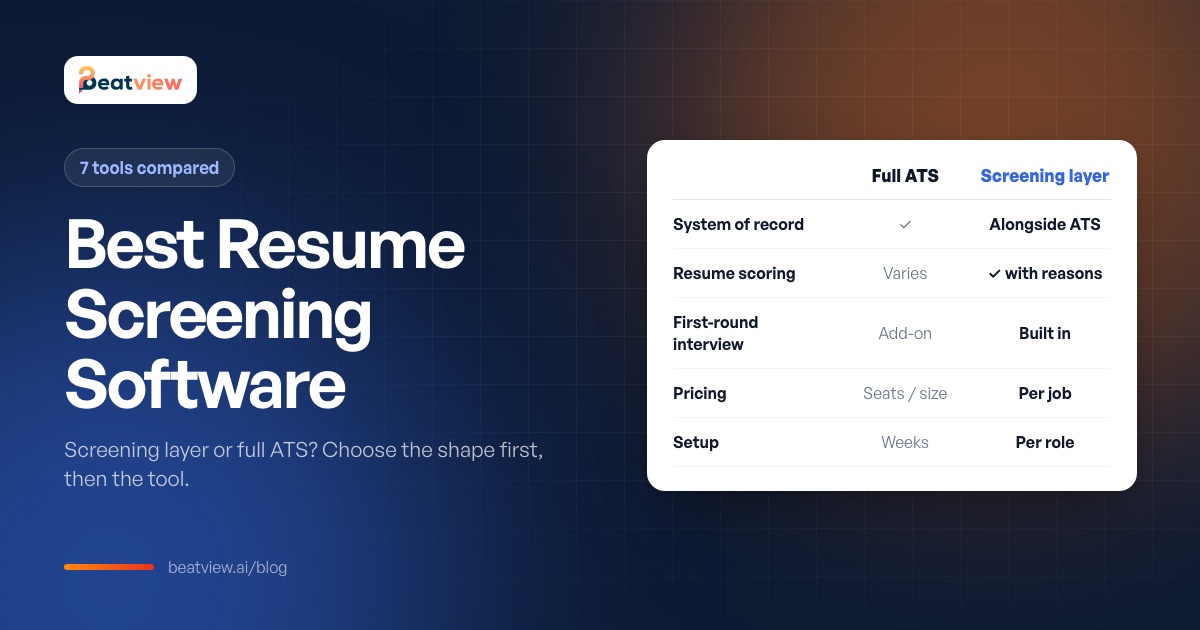
Seven resume screening tools compared on screening approach, pricing model and best fit, the four jobs screening software does, an eight-point buying checklist and advice for startups.

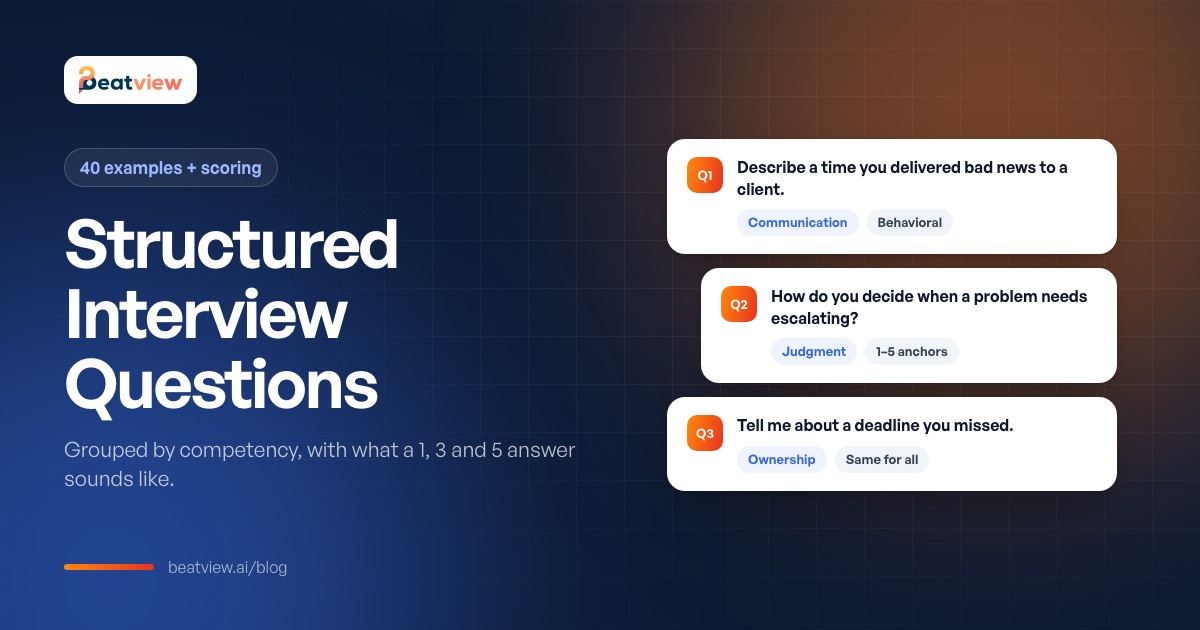
40 structured and competency-based interview questions to ask candidates, grouped by skill, with the evidence a strong answer contains, a full interview example and worked 1–5 scoring examples.

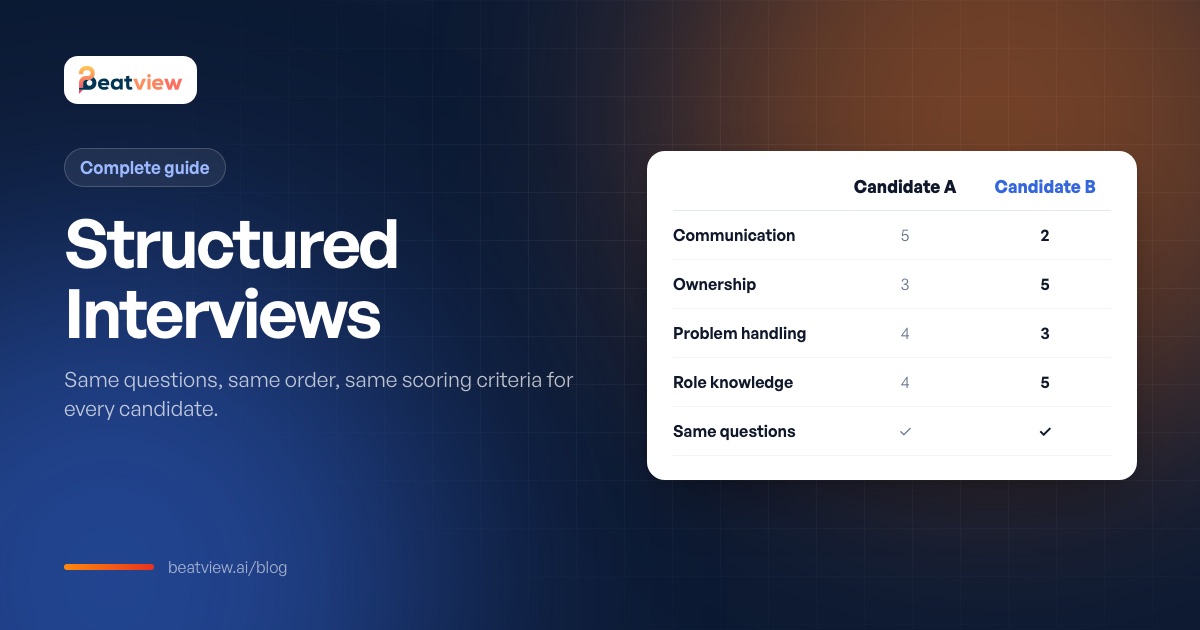
What a structured interview is, how it compares with unstructured and semi-structured interviews, its advantages and disadvantages, and a seven-step method with a worked example.

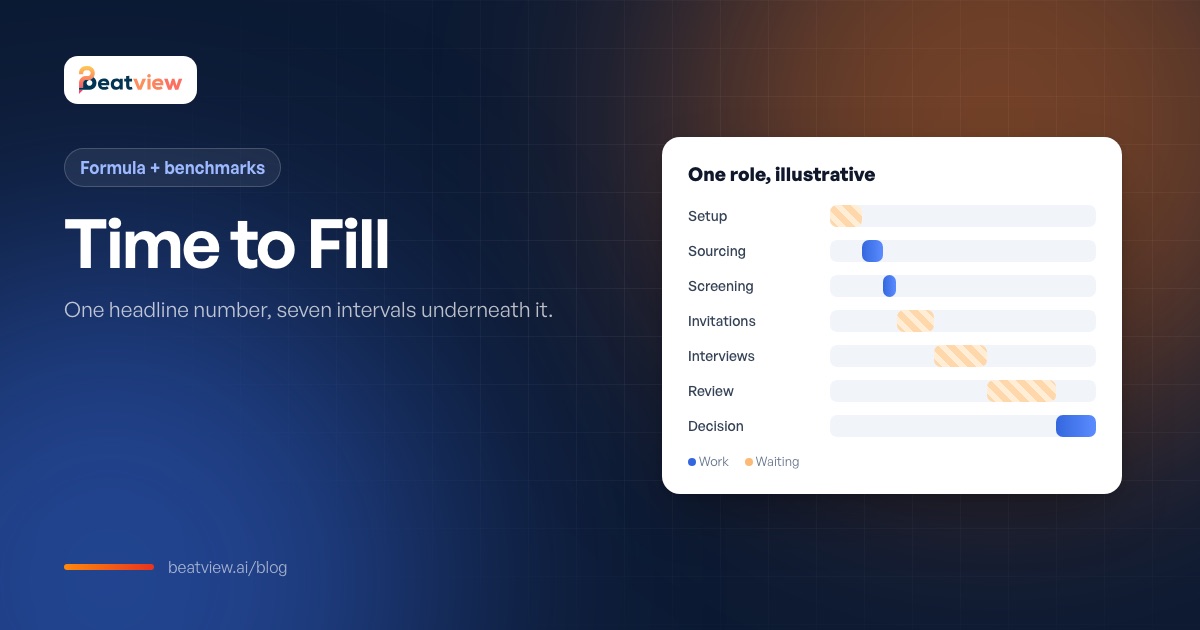
What time to fill measures, the formula with a worked example, how it differs from time to hire, the SHRM benchmark in context, and the seven intervals that show where the days actually go.

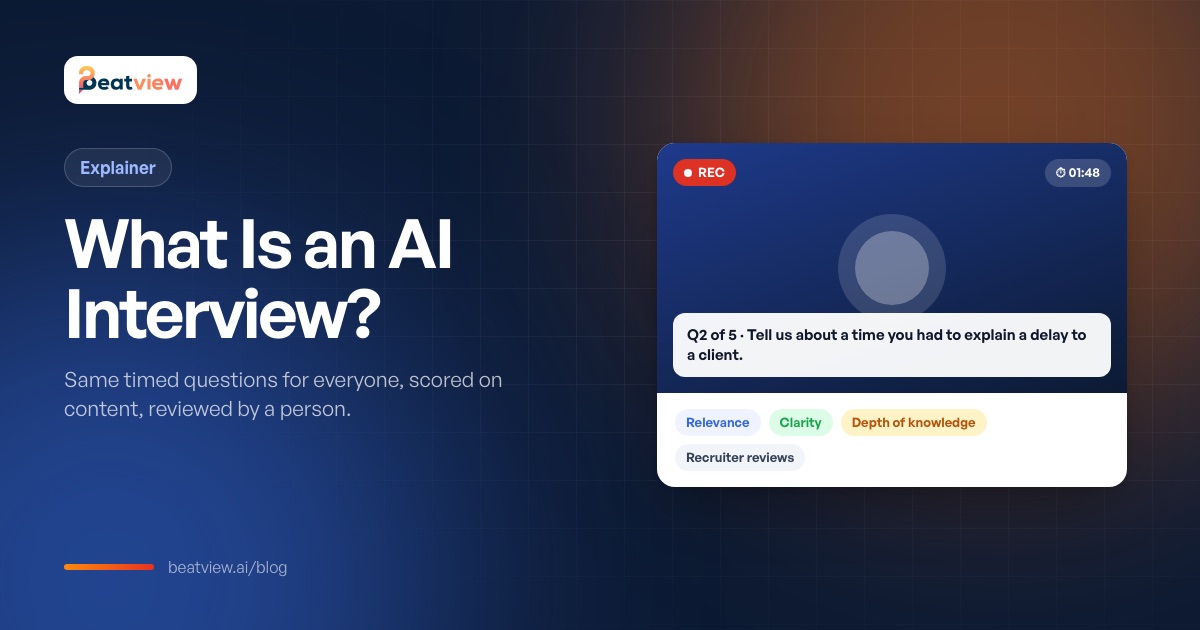
What an AI interview is, the main types, how they work step by step, what should and should not be scored, how candidates can prepare and the rules employers must follow.