Boolean Search for Recruiters: Operators, Examples and Strings to Copy
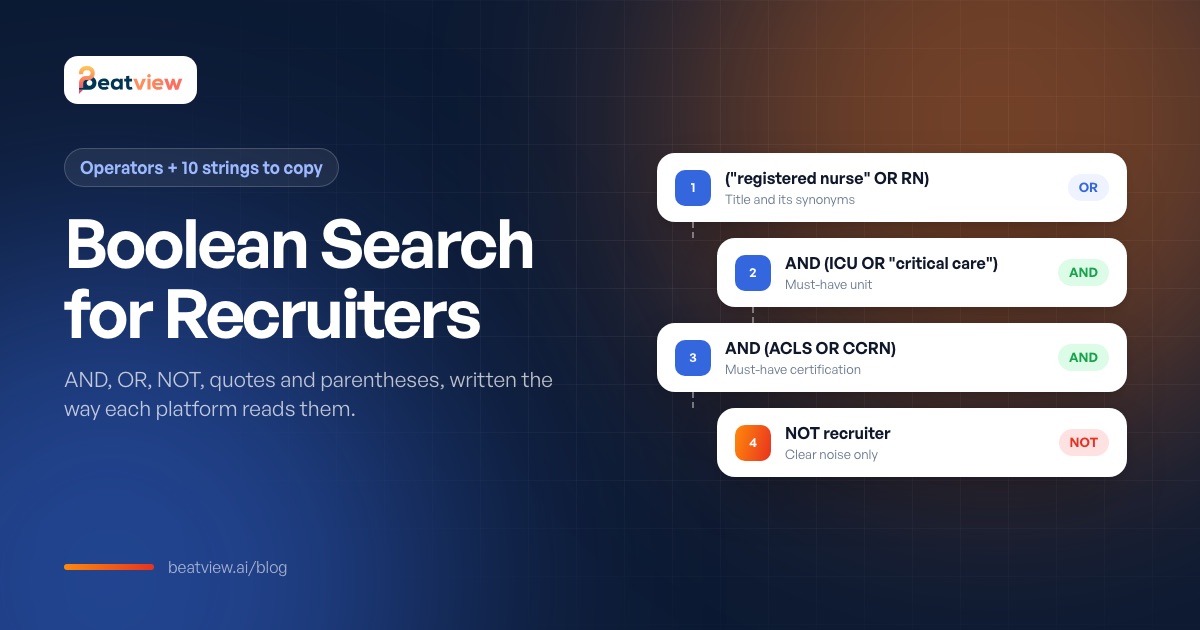
The five Boolean operators recruiters use, how LinkedIn and Google X-ray search each read them, how to build a string from a job brief, and 10 sourcing strings to copy and adapt.
How staffing and recruitment agencies work, win clients, price their services and find candidates.

The five Boolean operators recruiters use, how LinkedIn and Google X-ray search each read them, how to build a string from a job brief, and 10 sourcing strings to copy and adapt.

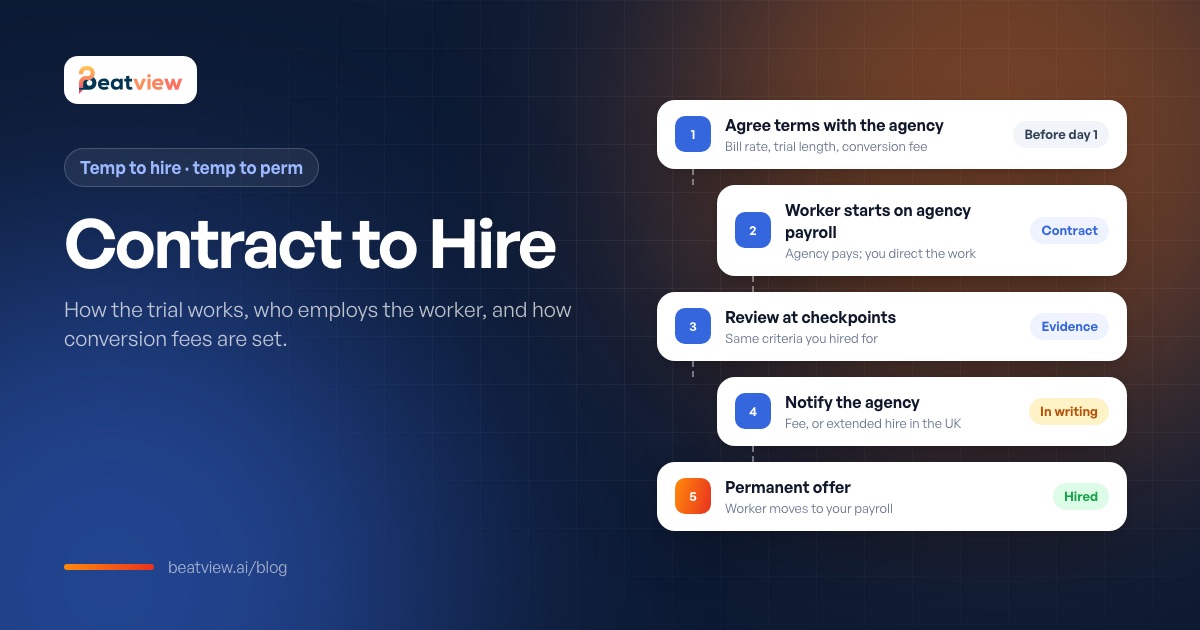
Contract to hire lets you try a worker through an agency before offering a permanent job. How it works, who employs the worker, how conversion fees are structured, and the UK and Illinois rules.

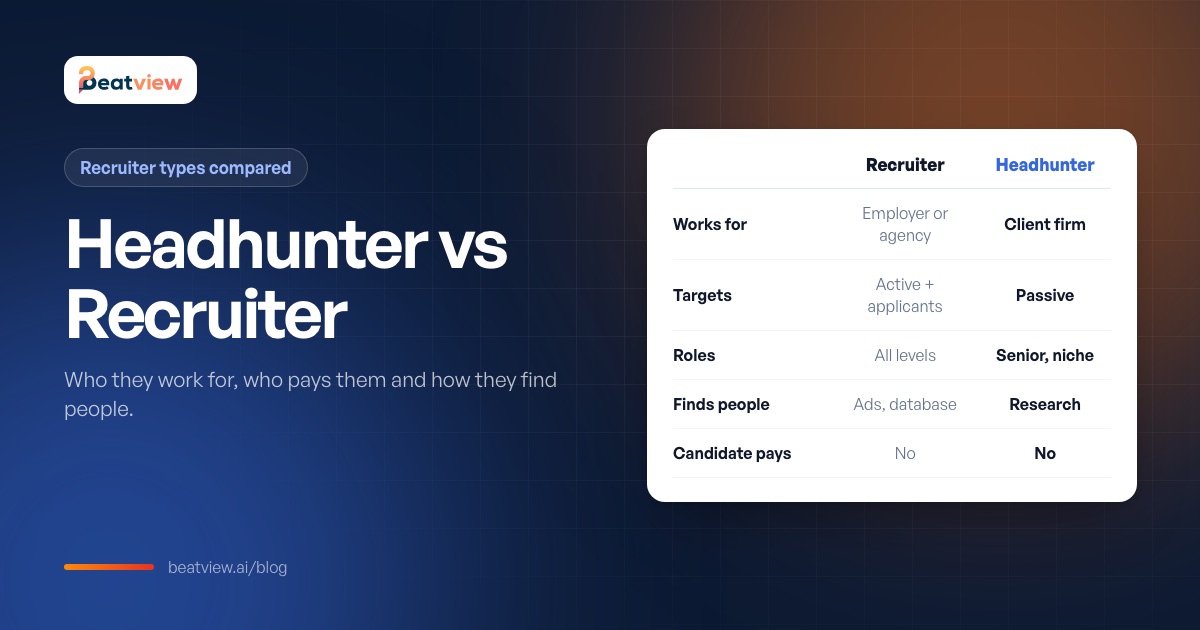
A headhunter approaches people who are not job hunting, usually for senior or specialist roles, on an employer’s behalf. Recruiter is the wider term. How in-house, agency and executive search recruiters differ.

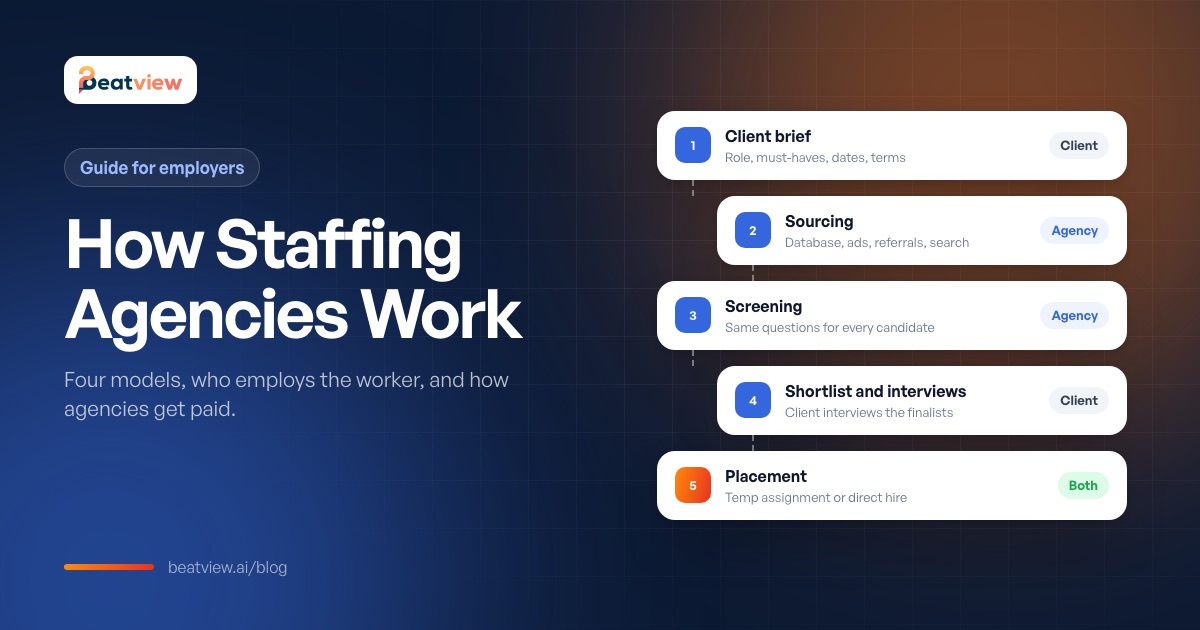
Staffing agencies find, screen and supply workers, and the employer pays. The four models, who employs the worker in each, how agencies make money, and the questions to ask before you sign.

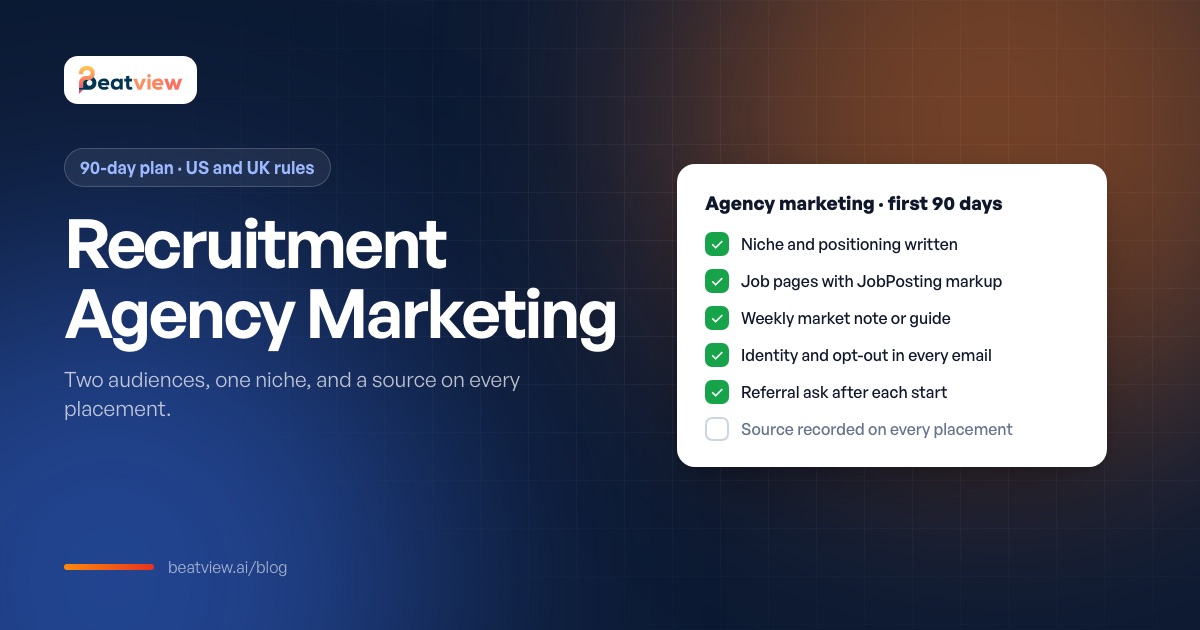
A practical recruitment agency marketing plan: two audiences, a niche you can own, job pages Google can list, useful content, LinkedIn and email within US and UK rules, referrals, reviews and a 90-day plan.

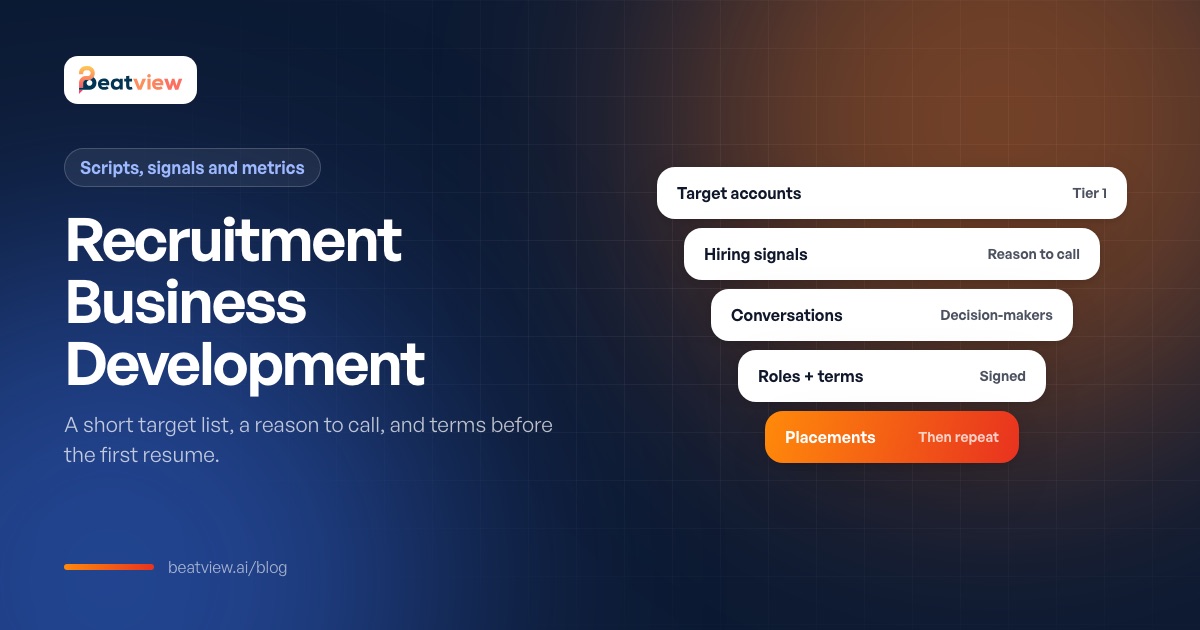
A practical guide to recruitment business development: build a target account list, spot hiring signals, use short call openers and emails, market candidates with consent, agree terms and track BD metrics.

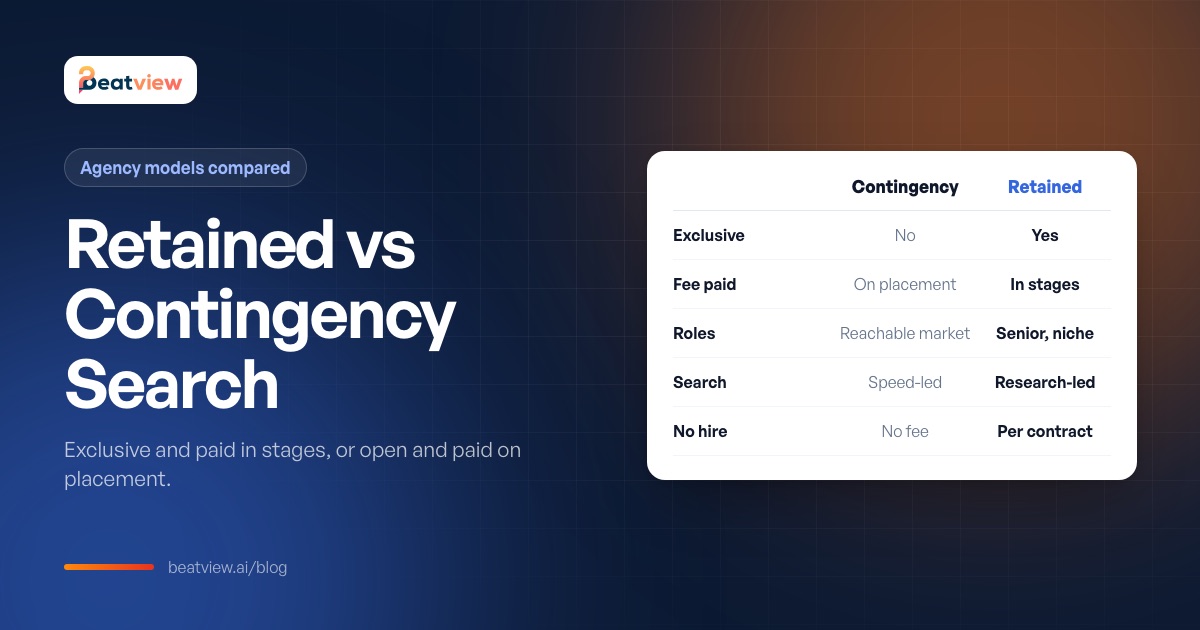
Retained search is exclusive and paid in stages; contingency search is non-exclusive and paid only on placement. How they differ, which roles suit each, and what to agree before you sign.